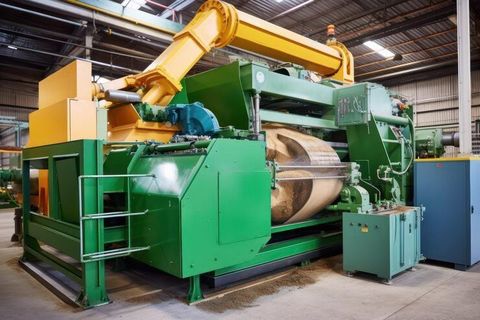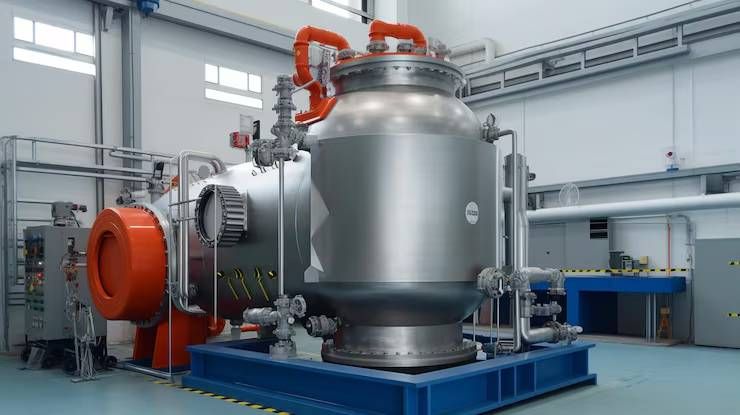
Solvent extraction systems are industrial processing systems that use a selected solvent to transfer a target compound from one material or phase into another. They are widely used for separating and recovering valuable substances in oilseed processing, hydrometallurgy, chemical processing, pharmaceuticals, environmental treatment, and other industrial applications.
A complete system can include extraction vessels, mixers, separators, pumps, heat exchangers, solvent-recovery equipment, filtration units, instrumentation, and process-control systems. The configuration depends on the material being processed and the desired separation.
What Are Solvent Extraction Systems?
A solvent extraction system is an integrated arrangement of equipment designed to bring a feed material into contact with a solvent and subsequently separate the desired extract from the remaining material.
The basic principle involves selective solubility. A solvent is selected because it preferentially dissolves or transfers the target component while leaving other components behind.
A typical system can contain:
Feed preparation equipment
Extraction vessels
Mixers or contactors
Settlers or separators
Pumps
Solvent storage
Evaporation equipment
Solvent recovery systems
Filtration units
Heat exchangers
Process-control instrumentation
The exact configuration varies substantially between industries.
How Solvent Extraction Works
The general process consists of several controlled stages.
1. Feed preparation: The raw material is prepared to provide suitable particle size, moisture content, concentration, or physical condition.
2. Solvent contact: The feed comes into controlled contact with the selected solvent.
3. Mass transfer: The target compound moves from the feed material into the solvent phase.
4. Phase separation: The extract-containing solvent is separated from the remaining feed or another liquid phase.
5. Solvent recovery: The target compound is separated from the solvent through evaporation, distillation, stripping, crystallization, or another appropriate process.
6. Solvent recycling: Recovered solvent can be conditioned and returned to the extraction cycle where the process design permits.
Major Solvent Extraction Technologies
Solid-Liquid Extraction
Solid-liquid extraction is widely used when a target component must be removed from a solid feed. The solvent contacts the solid material and dissolves the desired component.
Applications include oilseed extraction, botanical extraction, chemical processing, and selected pharmaceutical processes.
Liquid-Liquid Extraction
Liquid-liquid extraction transfers a dissolved compound from one liquid phase into another immiscible liquid phase.
Mixers, settlers, centrifugal contactors, and other equipment can provide controlled contact and phase separation.
Continuous Extraction
Continuous systems continuously introduce feed and solvent while removing extract and residual material. They are commonly considered for processes requiring sustained industrial throughput.
Batch Extraction
Batch systems process defined quantities of material in individual cycles. They can provide flexibility when processing multiple formulations or feedstocks.
Solvent Extraction Equipment
| Equipment | Main Function | Typical Application |
|---|---|---|
| Extractor | Provides solvent-feed contact | Primary extraction |
| Mixer | Promotes mass transfer | Liquid-liquid extraction |
| Settler | Separates phases | Phase separation |
| Centrifugal contactor | Rapid contact and separation | Continuous processing |
| Evaporator | Removes solvent | Extract concentration |
| Distillation column | Solvent recovery | Solvent recycling |
| Heat exchanger | Transfers thermal energy | Heating or cooling |
| Filter | Removes solids | Clarification |
| Storage tank | Holds solvent or extract | Process storage |
| Control system | Monitors process variables | Automation |
Equipment selection depends on flow rate, solvent characteristics, temperature, pressure, phase behavior, and required separation performance.
Solvent Extraction in Oilseed Processing
One of the major industrial applications of solvent extraction is vegetable-oil production.
Prepared oilseed material can be contacted with an appropriate extraction solvent to recover oil from the solid feed. The resulting miscella, containing oil and solvent, is then processed to separate the oil from the solvent.
Industrial oilseed extraction plants can incorporate:
Seed preparation systems
Extractors
Miscella processing equipment
Solvent evaporation systems
Solvent recovery units
Meal desolventizing equipment
Condensation systems
Storage and transfer systems
Process design must account for solvent containment, recovery, temperature control, emissions management, and applicable safety requirements.
Manufacturing Processes for Extraction Equipment
Manufacturing solvent extraction equipment involves several engineering and fabrication stages.
Engineering Design
Engineers determine vessel dimensions, flow paths, material compatibility, heat-transfer requirements, pressure ratings, and process connections.
Material Selection
Stainless steel, carbon steel, specialty alloys, and other materials can be selected according to the solvent, temperature, pressure, corrosion conditions, and hygiene requirements.
Fabrication
Vessels, piping, structural components, mixers, separators, and associated equipment are fabricated using cutting, forming, welding, machining, and assembly processes.
Surface Treatment
Depending on the application, internal surfaces may undergo polishing, passivation, coating, or other finishing processes.
Testing and Inspection
Equipment can undergo dimensional inspection, pressure testing, leak testing, weld inspection, functional testing, and instrumentation checks before commissioning.
Automation and Process Control
Modern solvent extraction plants can use automation to monitor and control critical process variables.
PLC and distributed control systems can manage pumps, valves, temperature, pressure, flow, liquid levels, and equipment sequences.
Sensors can provide real-time process information, while automated control loops can adjust operating parameters according to defined process conditions.
Data acquisition systems can also record production information for process monitoring, troubleshooting, and traceability.
Because many solvents are volatile or flammable, process design may require specialized electrical equipment, ventilation, containment, detection systems, and safety controls appropriate to the solvent and facility.
Global Manufacturers and Suppliers
The solvent extraction equipment market includes process-equipment manufacturers, engineering companies, separation-technology providers, oilseed-processing specialists, and industrial systems integrators.
Companies such as Alfa Laval, GEA, ANDRITZ, De Smet Engineers & Contractors, Crown Iron Works, Desmet, and Koch Modular provide technologies or equipment associated with extraction, separation, oilseed processing, or related process applications.
When evaluating suppliers, manufacturers can examine extraction capacity, solvent compatibility, equipment materials, process configuration, recovery efficiency, automation capabilities, safety engineering, documentation, maintenance requirements, and integration experience.
Industrial Applications
Solvent extraction systems are used across diverse industries.
Oilseed Processing
Systems recover oil from prepared seeds and other oil-bearing materials.
Hydrometallurgy
Solvent extraction can separate selected metal ions from aqueous solutions before downstream recovery processes.
Pharmaceutical Processing
Appropriately designed extraction systems can separate selected active compounds or intermediates from process streams.
Chemical Processing
Solvent extraction can separate and purify chemical compounds based on differences in solubility and phase distribution.
Environmental Processing
Extraction technologies can be applied to selected wastewater, contaminated-material, and resource-recovery processes.
Botanical and Natural Product Extraction
Specialized systems can extract selected compounds from plant-based raw materials under controlled process conditions.
How to Select a Solvent Extraction System
A structured evaluation helps identify suitable equipment.
1. Define the feed material: Establish composition, particle size, moisture, concentration, and physical properties.
2. Identify the target compound: Determine the material that must be extracted or separated.
3. Select the solvent: Evaluate selectivity, compatibility, recovery requirements, environmental considerations, and process safety.
4. Determine throughput: Establish feed rate, solvent-to-feed ratio, residence time, and required production capacity.
5. Select contact equipment: Compare extractors, mixers, settlers, centrifugal contactors, or other configurations.
6. Plan solvent recovery: Determine the appropriate evaporation, distillation, condensation, or stripping technology.
7. Evaluate automation and safety: Review instrumentation, containment, ventilation, detection, control systems, and applicable process-safety requirements.
Frequently Asked Questions
What are solvent extraction systems?
They are industrial systems that use a solvent to selectively extract a target compound from a solid or liquid feed and then separate the extracted material from the solvent.
What industries use solvent extraction?
Oilseed processing, chemical manufacturing, hydrometallurgy, pharmaceuticals, environmental processing, and botanical extraction are among the industries that use solvent extraction technologies.
What equipment is used in solvent extraction?
Common equipment includes extractors, mixers, settlers, centrifugal contactors, evaporators, distillation columns, heat exchangers, filters, storage tanks, pumps, and process-control systems.
What is the difference between solid-liquid and liquid-liquid extraction?
Solid-liquid extraction transfers a target compound from a solid into a solvent, while liquid-liquid extraction transfers a compound between two liquid phases with different properties.
How are solvent extraction systems automated?
PLC or distributed control systems can coordinate pumps, valves, heating and cooling systems, level controls, pressure monitoring, flow measurement, and extraction sequences.
Conclusion
Solvent extraction systems provide controlled methods for separating valuable compounds from solid or liquid feed materials. Their design can incorporate extraction vessels, contactors, separators, solvent-recovery equipment, heat exchangers, pumps, filtration systems, and automated controls.
The appropriate configuration depends on feed characteristics, target compounds, solvent properties, throughput, phase behavior, temperature and pressure requirements, and downstream processing. In industrial facilities, careful equipment selection and process-safety engineering are particularly important when volatile or flammable solvents are involved.