Torque limiter manufacturing involves producing mechanical devices that protect rotating machinery from excessive torque. A torque limiter disconnects, slips, or otherwise limits torque transmission when a defined threshold is reached, helping protect shafts, gears, couplings, motors, and driven equipment from mechanical overload.
These components are used across conveyors, packaging machinery, machine tools, agricultural equipment, material-handling systems, pumps, mixers, and automated production lines. Manufacturing involves precision machining, material selection, spring or friction mechanisms, heat treatment, assembly, calibration, and functional testing.
Context
What Is a Torque Limiter?
A torque limiter is a mechanical protection device installed within a power-transmission system. Under normal operating conditions, it transfers rotational force between the driving and driven components.
When transmitted torque exceeds the configured threshold, the limiter responds according to its design. It may slip, disengage, release, or interrupt torque transmission, reducing the mechanical load transferred to downstream equipment.
How Torque Limiters Work
Torque is influenced by the applied force, the distance from the rotational axis, and the angle at which the force acts.
In industrial transmission systems, a torque limiter is calibrated around a specified operating threshold. If an unexpected obstruction causes the driven machine to require substantially more torque, the limiter activates according to its mechanical design.
After the abnormal condition is addressed, some torque limiters automatically re-engage while others require manual resetting.
Major Torque Limiter Types
| Type | Operating Principle | Typical Application |
|---|---|---|
| Friction Torque Limiter | Controlled frictional slipping | Conveyors and machinery |
| Ball Detent Limiter | Mechanical release at threshold | Packaging equipment |
| Shear Pin Limiter | Pin breaks under overload | Heavy machinery |
| Magnetic Limiter | Magnetic torque transmission | Specialized automation |
| Pneumatic Limiter | Air pressure controls engagement | Automated machinery |
| Electronic Torque Limiter | Sensor and control-based protection | Advanced machine systems |
| Jaw-Type Limiter | Mechanical disengagement | Rotating equipment |
The appropriate configuration depends on torque range, shaft dimensions, operating speed, response requirements, reset characteristics, and machine architecture.
Friction Torque Limiters
Friction-based systems use friction surfaces and controlled clamping force. When the transmitted torque exceeds the configured threshold, the components slip relative to one another.
The threshold can depend on friction characteristics, spring force, surface condition, and adjustment settings.
Ball Detent Torque Limiters
Ball detent systems use mechanical balls, detents, and spring-loaded components. When the torque threshold is exceeded, the mechanism releases and interrupts transmission.
These systems can provide rapid mechanical protection for applications where precise overload response is required.
Shear Pin Torque Limiters
Shear pin systems use a deliberately engineered mechanical element that fails at a specified load. The broken pin disconnects the transmission path and protects connected machinery.
The replacement procedure after activation depends on the equipment design.
Importance
Why Torque Limiters Matter
Rotating machinery can experience unexpected overloads caused by material blockages, misalignment, foreign objects, process changes, or component failures.
A torque limiter provides a defined mechanical response to excessive torque and can help prevent damage from propagating through the transmission system.
Protecting Power-Transmission Components
A mechanical overload can affect shafts, gears, bearings, couplings, chains, belts, and motors. A torque limiter can interrupt or reduce torque transmission before the load reaches components that may be more difficult to replace.
Supporting Automated Machinery
Automated production equipment often operates at high speed and with precisely coordinated movements. Unexpected mechanical resistance can disrupt machine sequences.
Torque-limiting devices can be integrated into drive systems to provide an additional mechanical protection layer.
Reducing Equipment Downtime
Some torque limiter designs automatically reset after an overload condition has been removed. Other systems require manual intervention.
The reset configuration affects how quickly machinery can return to operation after an overload event.
Supporting Machine Safety
Torque limiters are mechanical protection devices, but they should not be treated as a replacement for complete machine-safety systems.
Guarding, emergency stops, control logic, safe isolation procedures, and other safety measures may be required depending on the machinery and applicable regulations.
Torque Limiter Manufacturing
Material Selection
Materials are selected according to load, speed, temperature, wear, corrosion conditions, and manufacturing requirements.
Common materials can include carbon steel, alloy steel, stainless steel, aluminum alloys, engineering plastics, and specialized friction materials.
The selection depends on the component and application rather than one universal material.
Precision Machining
Torque limiter components may require turning, milling, drilling, grinding, broaching, and CNC machining.
Dimensional accuracy is particularly important for shafts, bores, keyways, threads, housings, hubs, and mating surfaces.
Gear and Hub Manufacturing
Some torque limiter assemblies include hubs, gear interfaces, sprocket connections, or other transmission elements.
These components need accurate geometry so that torque can be transferred without unwanted movement or misalignment.
Spring Manufacturing
Spring-loaded torque limiters depend on carefully selected spring characteristics. Manufacturing can involve wire forming, heat treatment, grinding, dimensional inspection, and load testing.
Spring force directly influences the activation characteristics of the mechanical assembly.
Heat Treatment
Heat treatment can modify hardness, strength, wear resistance, and fatigue performance.
Processes such as hardening, tempering, carburizing, and nitriding may be used for selected steel components depending on the design.
Friction Surface Manufacturing
Friction-based torque limiters use friction discs, plates, linings, or related surfaces. Material selection and surface characteristics influence the torque-transmission behavior.
Testing is required to confirm that the assembled device performs within its specified operating range.
Manufacturing Process
A generalized torque limiter manufacturing workflow can include:
- Engineering design
- Material selection
- Raw-material preparation
- CNC machining
- Heat treatment where required
- Surface finishing
- Component inspection
- Spring or friction-component preparation
- Assembly
- Torque calibration
- Functional testing
- Final documentation
Manufacturing requirements vary according to limiter type and intended application.
Computer-Aided Design
CAD software can be used to create component drawings and assemblies. Engineers can evaluate dimensions, clearances, mounting arrangements, and interfaces with connected machinery.
Computer-Aided Manufacturing
CAM systems can translate component designs into CNC machining instructions. Automated manufacturing can support repeatable production of complex components.
Quality Inspection
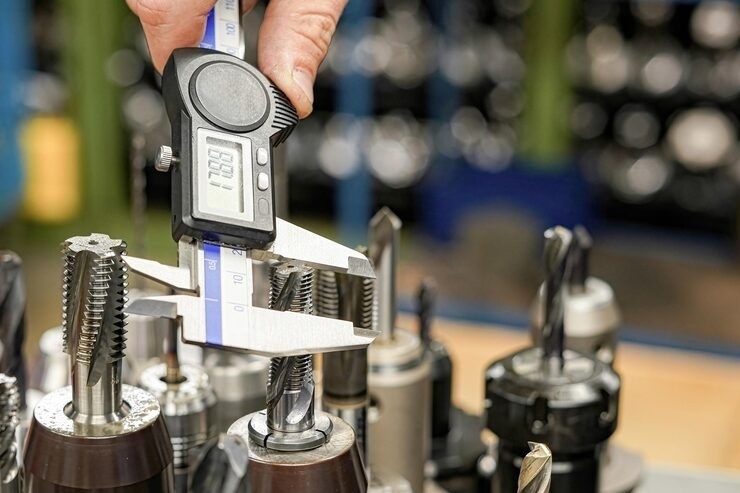
Inspection can include dimensional measurement, hardness testing, surface inspection, runout measurement, spring-force testing, and torque verification.
For critical industrial applications, additional testing may be specified according to the component design.
Industrial Applications
Conveyor Systems
Conveyors can encounter blockages or material accumulation that suddenly increase drive torque. Torque limiters can protect drive components during these conditions.
Packaging Machinery
Packaging lines use rotating shafts, indexing systems, filling mechanisms, and other motion components. Torque limiters can protect equipment when products become incorrectly positioned or obstruct machine movement.
Machine Tools
Machine tools can incorporate torque protection in selected transmission and drive systems. Limiting excessive mechanical loads can help protect precision components.
Agricultural Machinery
Agricultural equipment can encounter changing material loads and unexpected obstructions. Torque-limiting devices are used in selected driveline and implement applications.
Material-Handling Equipment
Hoists, feeders, mixers, conveyors, and other material-handling equipment can use torque protection where sudden load changes are possible.
Food Processing Machinery
Mixers, conveyors, grinders, filling systems, and other food-processing equipment may use torque limiters within their mechanical drive arrangements.
Pumps and Rotating Equipment
Selected pump and rotating-equipment systems can incorporate torque protection to address mechanical overload conditions.
Suppliers and Manufacturing Ecosystem
Torque limiter suppliers include specialized power-transmission manufacturers, coupling producers, industrial component manufacturers, and automation-equipment providers.
Equipment specifications vary considerably between manufacturers. When evaluating a component or supplier, organizations can examine:
- Torque range
- Shaft diameter
- Bore configuration
- Operating speed
- Overload threshold
- Reset mechanism
- Temperature range
- Material specifications
- Mounting arrangement
- Environmental compatibility
- Documentation
- Testing requirements
Compatibility with the complete drive system is important because a torque limiter must operate correctly with the connected shaft, coupling, motor, gearbox, and driven equipment.
Recent Updates
Smart Torque Monitoring
Modern machine systems increasingly combine mechanical torque protection with electronic monitoring. Sensors can provide information about torque, speed, vibration, or equipment condition.
This information can be integrated with industrial control platforms for monitoring and analysis.
Condition Monitoring
Vibration, temperature, motor-current, and torque measurements can provide additional information about transmission-system behavior.
Condition-monitoring platforms can help maintenance teams identify changes that may require inspection.
Compact Designs
Advances in materials and precision manufacturing are enabling compact torque-limiting components for equipment with restricted installation space.
Compact systems can be designed around specific shaft dimensions and torque requirements.
High-Speed Applications
Some automated machinery operates at high rotational speeds. Torque limiter designs for these applications require attention to rotational balance, friction behavior, heat generation, and mechanical integrity.
Automated Resetting
Certain torque limiter designs can automatically re-engage after the overload condition has been removed. This can reduce manual intervention in appropriately configured machinery.
The suitability of automatic reset depends on the application and safety requirements.
Digital Manufacturing
CNC machining, automated inspection, digital production records, and computer-aided engineering are increasingly integrated into precision power-transmission component manufacturing.
These technologies can improve production traceability and support dimensional consistency.
Laws or Policies
Machinery Safety
Torque limiters are components within larger machine systems. Their use should be considered alongside guarding, emergency stopping, isolation procedures, control systems, and other applicable machine-safety measures.
Engineering Standards
Power-transmission components may be designed and tested according to applicable mechanical, dimensional, material, and safety standards.
The relevant standards depend on the equipment, industry, jurisdiction, and component configuration.
Workplace Safety
Installation and maintenance activities involving rotating machinery should follow appropriate isolation and stored-energy procedures.
Personnel should verify that rotating components cannot unexpectedly move before maintenance begins.
Documentation and Traceability
Industrial components may require technical documentation covering dimensions, materials, operating limits, testing, calibration, and maintenance.
Traceability requirements depend on the application and organization.
Tools and Resources
Torque Measurement Equipment
Torque transducers and calibration equipment can be used to verify the activation threshold of torque-limiting devices.
CAD and Engineering Software
CAD and mechanical-design platforms can help engineers develop component geometry and evaluate integration with shafts, couplings, and gearboxes.
CNC Manufacturing Equipment
CNC turning, milling, grinding, drilling, and other machining equipment can produce precision torque limiter components.
Inspection Equipment
Coordinate-measuring machines, micrometers, gauges, hardness testers, surface-measurement instruments, and other inspection equipment can verify component specifications.
Maintenance Systems
CMMS and EAM platforms can record torque limiter inspections, replacement history, equipment identification, and maintenance activities.
FAQs
What is torque limiter manufacturing?
Torque limiter manufacturing is the engineering and production of mechanical devices that restrict or interrupt torque transmission when a predefined overload condition occurs.
What are torque limiters used for?
Torque limiters are used to protect mechanical transmission systems from excessive torque. Applications include conveyors, packaging machinery, agricultural equipment, material handling, machine tools, and process machinery.
What types of torque limiters are available?
Common types include friction, ball detent, shear pin, magnetic, pneumatic, jaw-type, and electronically monitored torque-limiting systems.
How are torque limiters manufactured?
Manufacturing can involve CAD design, material preparation, CNC machining, heat treatment, surface finishing, component inspection, assembly, calibration, and functional testing.
What should be considered when selecting a torque limiter?
Important parameters include torque range, shaft size, operating speed, overload threshold, reset method, temperature, materials, mounting configuration, environmental conditions, and compatibility with the connected machinery.
Conclusion
Torque limiter manufacturing combines mechanical design, precision machining, material engineering, assembly, calibration, and testing to produce components that manage excessive torque within industrial transmission systems.
Friction, ball detent, shear pin, magnetic, pneumatic, and other torque-limiting technologies serve different machine requirements. Advances in precision manufacturing, sensor integration, condition monitoring, compact mechanical designs, and automated production are expanding the range of torque-protection technologies available for industrial equipment.
Correct selection requires evaluation of torque requirements, rotational speed, shaft configuration, overload behavior, environmental conditions, reset characteristics, and applicable engineering and safety requirements.