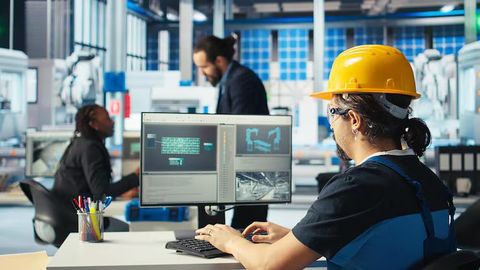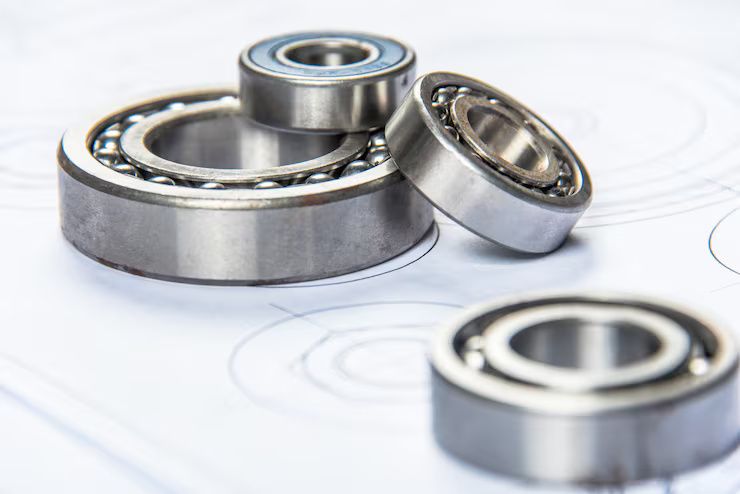
Bearing manufacturing is a precision engineering process used to produce components that support rotating shafts while reducing friction between moving parts. Bearings are found in electric motors, pumps, gearboxes, conveyors, automobiles, machine tools, industrial robots, turbines, and many other mechanical systems.
Modern bearing manufacturing combines material processing, precision machining, heat treatment, grinding, surface finishing, inspection, and automated assembly. Manufacturing requirements vary according to bearing type, dimensions, load conditions, rotational speed, operating temperature, lubrication, and application environment.
Context
What Is Bearing Manufacturing?
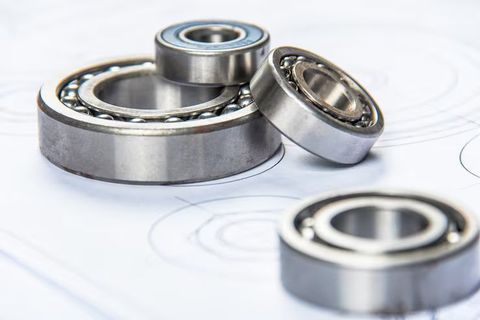
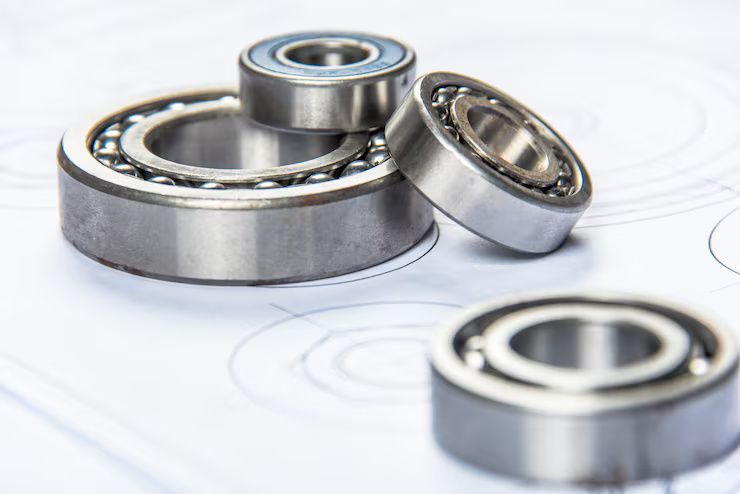
Bearing manufacturing involves producing and assembling the components of a rolling-element or plain bearing. Rolling bearings generally contain inner rings, outer rings, rolling elements, and a cage, while plain bearings use sliding surfaces rather than rolling elements.
The production process must maintain tight dimensional and geometric tolerances because small variations can influence bearing operation, noise, vibration, friction, and service life.
Major Types of Bearings
Industrial bearing production covers several major categories.
| Bearing Type | Main Characteristics | Typical Applications |
|---|---|---|
| Deep-Groove Ball Bearing | Radial and moderate axial loads | Motors and pumps |
| Angular-Contact Bearing | Combined radial and axial loads | Machine tools |
| Cylindrical Roller Bearing | High radial load capacity | Gearboxes and machinery |
| Tapered Roller Bearing | Combined loading | Automotive and industrial drives |
| Spherical Roller Bearing | Misalignment accommodation | Heavy machinery |
| Needle Roller Bearing | Compact radial design | Transmissions |
| Thrust Bearing | Primarily axial loads | Rotating equipment |
| Plain Bearing | Sliding contact | Hinges and machinery |
Bearing Components
A conventional rolling bearing typically includes four major component groups:
- Inner ring
- Outer ring
- Rolling elements
- Cage
Additional components can include seals, shields, spacers, retaining rings, and specialized lubrication arrangements.
The dimensions and geometry of each component must work together as a complete bearing assembly.
Production Processes
Raw Material Preparation
Bearing rings and rolling elements are commonly manufactured from specially selected steels or other engineered materials. Material selection depends on load, hardness, fatigue requirements, operating temperature, corrosion conditions, and application.
Incoming material can undergo chemical composition verification, dimensional inspection, and other quality checks before entering production.
Ring Manufacturing
Bearing rings generally begin as steel tube, bar, or forged material. Depending on the manufacturing route, processes may include cutting, forging, turning, heat treatment, grinding, and superfinishing.
The initial machining stage establishes the basic geometry of the inner and outer rings.
Forging
Forging can be used to shape bearing components before precision machining. Controlled deformation can create a near-net shape that is subsequently machined to the required dimensions.
Process parameters such as temperature, deformation, tooling, and material condition need to be controlled according to the manufacturing specification.
Turning and Machining
CNC turning and related machining processes create the basic dimensions and features of bearing rings.
Machining may establish:
- Bore diameter
- Outside diameter
- Width
- Raceway geometry
- Shoulder features
- Seal grooves
- Chamfers
Additional machining operations may follow heat treatment.
Heat Treatment
Heat treatment is an important stage in bearing production because bearing components need suitable hardness and fatigue characteristics.
Depending on material and design, processes can include hardening, tempering, carburizing, induction treatment, or other controlled thermal processes.
Heat treatment must be carefully controlled because dimensional changes can occur during the process.
Grinding
Precision grinding is used to achieve accurate dimensions and surface characteristics after heat treatment.
Grinding operations can include internal grinding, external grinding, raceway grinding, centerless grinding, and face grinding.
The specific process depends on the component geometry.
Superfinishing
Superfinishing produces a highly controlled surface condition on bearing raceways and other functional surfaces.
The process can reduce surface irregularities and create a surface texture appropriate for rolling contact and lubrication.
Rolling Element Manufacturing
Balls, rollers, and other rolling elements require precision manufacturing.
Steel balls may undergo forming, heat treatment, grinding, lapping, and sorting. Rollers may require turning, heat treatment, grinding, and finishing of their cylindrical or specialized surfaces.
Dimensional consistency is important because rolling elements operate in close contact with bearing raceways.
Cage Manufacturing
Bearing cages maintain spacing between rolling elements. They may be produced from stamped steel, machined metal, polymer materials, or other engineered materials.
The appropriate cage design depends on rotational speed, load, temperature, lubrication, and bearing configuration.
Manufacturing Technologies
CNC Machining
CNC equipment provides computer-controlled machining for bearing components. It can produce repeatable geometries and support automated production sequences.
Precision Grinding
Grinding equipment is fundamental to high-precision bearing production. Modern machines can control dimensional characteristics, surface finish, roundness, and other geometric properties.
Automated Inspection
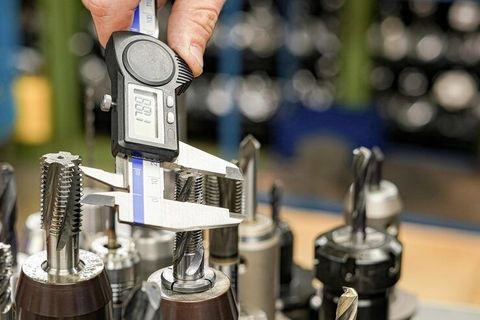
Automated inspection systems can measure bearing dimensions and detect selected surface or geometric deviations.
Measurement technologies may include optical systems, laser measurement, coordinate measurement, air gauges, and specialized bearing inspection equipment.
Machine Vision
Machine-vision systems can inspect components for selected defects, contamination, surface irregularities, markings, and assembly conditions.
Vision systems can operate inline, allowing inspection to occur during production.
Automated Assembly
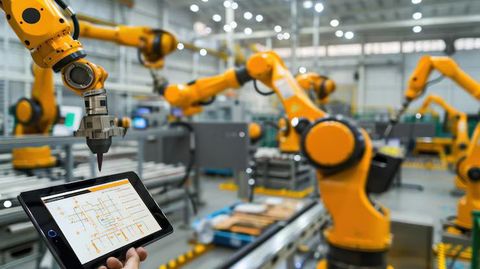
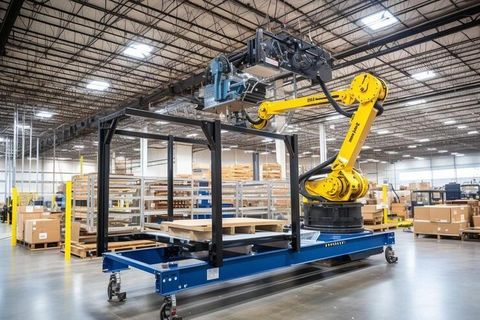
Automated assembly systems can position rings, rolling elements, cages, seals, and other components.
Automation can improve process consistency and provide traceability when integrated with production-control systems.
Bearing Manufacturing Equipment
Forging Equipment
Forging presses, heading machines, dies, furnaces, and material-handling equipment may be used during the initial shaping of components.
CNC Turning Machines
CNC lathes produce basic dimensions and features in bearing rings and other components.
Grinding Machines
Internal, external, centerless, raceway, and face grinding machines provide precision finishing after heat treatment.
Heat-Treatment Equipment
Industrial furnaces, quenching systems, tempering equipment, and atmosphere-control systems can be used to modify material properties.
Lapping and Superfinishing Equipment
These machines provide controlled surface finishing for bearing raceways and rolling elements.
Measurement Equipment
Production facilities may use:
- Roundness measurement systems
- Surface-finish instruments
- Diameter gauges
- Coordinate measuring machines
- Hardness testers
- Optical measurement systems
- Profile measurement equipment
Importance
Why Bearing Manufacturing Matters
Bearings support rotating machinery and help manage friction and mechanical loads. Their performance can influence equipment vibration, energy consumption, noise, temperature, and operating reliability.
Precision manufacturing is therefore important because bearing components interact continuously during operation.
Dimensional Accuracy
Bearing rings and rolling elements require controlled dimensions and geometry. Small deviations can affect internal clearance, contact conditions, and load distribution.
Manufacturers use precision machining and inspection technologies to control these characteristics.
Surface Quality
Bearing raceways and rolling elements operate under repeated contact stresses. Surface condition can therefore influence friction, lubrication behavior, wear, and fatigue.
Grinding and superfinishing are used to establish suitable surface characteristics.
Material Quality
Bearing materials must withstand repeated mechanical loading. Steel cleanliness, heat-treatment condition, hardness, and microstructure can influence component performance.
Material inspection and controlled thermal processing are therefore important parts of production.
Suppliers and Manufacturing Ecosystem
The bearing industry includes original equipment manufacturers, specialized bearing producers, precision-component manufacturers, industrial distributors, and component suppliers.
Organizations selecting bearing manufacturers or suppliers can evaluate:
- Bearing type
- Dimensions
- Load ratings
- Speed requirements
- Material specifications
- Sealing arrangement
- Lubrication requirements
- Tolerance classes
- Quality documentation
- Application compatibility
Bearing identification codes can provide information about dimensions, design characteristics, internal clearance, sealing, and other features depending on the manufacturer's coding system.
Industrial Applications
Electric Motors
Electric motors use bearings to support rotor shafts and maintain controlled rotation. Bearing selection depends on motor speed, load, temperature, lubrication, and electrical considerations.
Gearboxes
Industrial gearboxes contain multiple rotating shafts and gear elements. Bearings support these shafts and help maintain the alignment of interacting components.
Pumps
Centrifugal pumps and other rotating pump designs commonly use bearings to support shafts. Operating conditions can include continuous rotation, fluid exposure, vibration, and temperature variation.
Conveyors
Conveyor drive systems can use bearings in drive assemblies, rollers, pulleys, and other rotating components.
Machine Tools
Machine tools require high rotational accuracy and controlled spindle movement. Specialized precision bearings can be used where accuracy and speed are important.
Industrial Robots
Robotic joints and transmission systems can incorporate specialized bearing arrangements. These applications can require compact designs, controlled friction, rigidity, and accurate movement.
Wind Turbines
Wind turbines contain several bearing systems supporting rotating components. Bearings can be exposed to substantial loads, changing speeds, temperature variations, and environmental conditions.
Automotive Systems
Automotive applications use many bearing configurations in wheel assemblies, transmissions, engines, steering systems, and other mechanical components.
Recent Updates
Smart Manufacturing
Bearing production is increasingly incorporating connected machines, automated inspection, production data collection, and digital manufacturing systems.
These technologies can help manufacturers monitor machine conditions and production parameters.
AI-Based Inspection
Machine-learning methods are being investigated for image-based defect detection, process monitoring, and anomaly identification.
AI systems can support inspection workflows, although measurement validation remains important for production decisions.
Advanced Surface Engineering
Improved coatings and surface-treatment technologies are being investigated for specialized bearing applications.
These technologies can be designed to address wear, friction, corrosion, or operating conditions that differ from conventional bearing environments.
Condition Monitoring
Vibration, temperature, acoustic, and lubricant monitoring can provide information about bearing condition during equipment operation.
Condition-monitoring systems can help identify changes in bearing behavior and support maintenance planning.
Digital Traceability
Manufacturing execution and quality systems can connect components with production batches, inspection records, heat-treatment information, and process data.
Digital traceability can support quality investigations and manufacturing documentation.
Energy-Efficient Manufacturing
Bearing manufacturers are also examining production methods that reduce energy consumption during machining, heat treatment, grinding, and finishing.
Process optimization can involve equipment efficiency, thermal management, coolant systems, and production scheduling.
Laws or Policies
Quality Management
Bearing manufacturers serving regulated or safety-sensitive industries may operate under formal quality-management systems. Documentation can cover material control, process inspection, calibration, nonconformance management, and traceability.
Machinery Safety
Bearing manufacturing equipment includes presses, grinders, CNC machines, furnaces, automated handling systems, and other machinery. Appropriate guarding, interlocks, emergency stops, and operator procedures are important.
Environmental Requirements
Manufacturing can involve metalworking fluids, lubricants, heat-treatment emissions, metal residues, and other industrial waste streams.
Facilities need to follow environmental requirements applicable to their processes and location.
Calibration
Measurement equipment used for bearing inspection requires appropriate calibration and verification according to the facility's quality procedures and measurement requirements.
Tools and Resources
CAD and Engineering Software
Computer-aided design systems are used to develop bearing geometry and manufacturing tooling. Engineering analysis can evaluate load distribution, contact conditions, and component behavior.
Metrology Systems
Precision measurement equipment helps verify dimensions, roundness, surface finish, profile, and other characteristics.
Manufacturing Execution Systems
MES platforms can connect production operations with material records, inspection information, machine data, and production history.
Condition-Monitoring Tools
Vibration analyzers, thermal sensors, acoustic monitoring systems, and lubricant-analysis tools can be used to assess bearings during equipment operation.
Technical Standards
Bearing dimensions, tolerances, load ratings, terminology, and testing can be covered by international and industry standards. Manufacturers and equipment designers should identify the standards applicable to their particular bearing and application.
FAQs
What is bearing manufacturing?
Bearing manufacturing is the precision production and assembly of components such as inner rings, outer rings, rolling elements, cages, seals, and related parts used to support rotating machinery.
What materials are used in bearing manufacturing?
Specialized bearing steels are widely used for rolling components, while other materials may be used for cages, seals, coatings, or specialized applications.
What equipment is used to manufacture bearings?
Common equipment includes forging machines, CNC turning machines, heat-treatment systems, grinding machines, superfinishing equipment, automated assembly systems, and precision inspection instruments.
Why is grinding important in bearing manufacturing?
Grinding provides precise dimensions and surface characteristics after heat treatment. It is commonly used for raceways, bores, outside surfaces, faces, and rolling elements.
What industries use industrial bearings?
Industrial bearings are used in manufacturing machinery, electric motors, pumps, gearboxes, conveyors, machine tools, robotics, wind turbines, automotive equipment, mining machinery, and many other rotating systems.
Conclusion
Bearing manufacturing combines materials engineering, precision machining, heat treatment, grinding, surface finishing, inspection, and automated assembly. Each production stage contributes to the dimensional accuracy, surface characteristics, material properties, and functional behavior of the finished bearing.
Modern bearing production increasingly incorporates CNC machining, automated inspection, machine vision, digital traceability, connected manufacturing equipment, and condition-monitoring technologies. Selecting an appropriate bearing requires consideration of load, speed, dimensions, operating temperature, lubrication, sealing, alignment, material characteristics, and the requirements of the equipment in which it will operate.