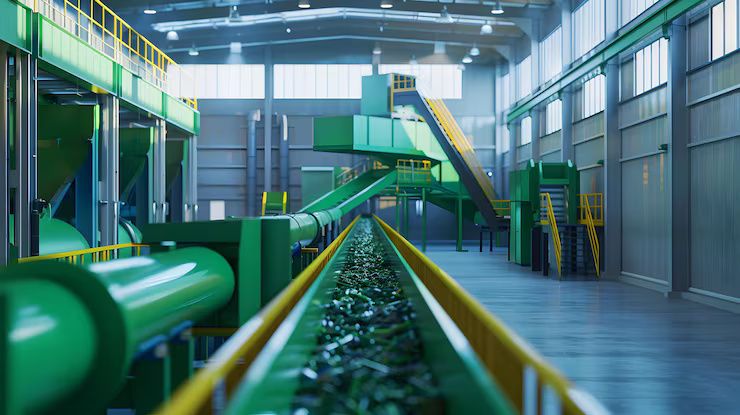
Plastics manufacturing involves converting polymer materials into finished products, components, packaging, films, pipes, containers, and engineered parts. The industry uses processes such as injection molding, extrusion, blow molding, thermoforming, rotational molding, and compression molding.
Modern plastics manufacturing combines polymer science, precision machinery, process automation, robotics, quality inspection, and material-handling systems. Production requirements vary according to polymer type, product geometry, volume, dimensional tolerances, surface characteristics, and intended application.
Context
What Is Plastics Manufacturing?
Plastics manufacturing is the industrial process of converting polymer materials into usable shapes and products. Thermoplastics, thermosetting polymers, elastomers, and reinforced polymer compounds can be processed using different technologies.
Common materials include polyethylene (PE), polypropylene (PP), polyvinyl chloride (PVC), polyethylene terephthalate (PET), polystyrene (PS), acrylonitrile butadiene styrene (ABS), polyamide (PA), and polycarbonate (PC).
Major Plastics Manufacturing Processes
Different manufacturing processes are suited to different product geometries and material characteristics.
| Process | Basic Principle | Typical Applications |
|---|---|---|
| Injection Molding | Molten polymer injected into a mold | Components, housings, closures |
| Extrusion | Polymer pushed through a die | Pipes, profiles, films |
| Blow Molding | Air expands heated polymer | Bottles, containers, tanks |
| Thermoforming | Heated sheet formed over a mold | Trays, packaging, panels |
| Rotational Molding | Polymer formed inside a rotating mold | Tanks, containers |
| Compression Molding | Material compressed in a heated mold | Thermoset components |
| Film Casting | Polymer formed into thin film | Packaging and industrial films |
| Pultrusion | Reinforced polymer pulled through a die | Structural profiles |
Injection Molding
Injection molding is widely used for producing precise plastic components. Polymer pellets are heated inside a barrel and pushed into a mold cavity under controlled pressure.
After cooling, the mold opens and the finished component is removed. Automated systems can then transfer components to inspection, assembly, or packaging.
Plastic Extrusion
Extrusion continuously produces products with consistent cross-sectional profiles. Polymer material is heated and conveyed through a screw before passing through a die.
Extrusion is commonly used for pipes, tubes, sheets, films, cables, window profiles, and other continuous products.
Blow Molding
Blow molding creates hollow plastic products by expanding heated polymer against the interior of a mold. Different configurations include extrusion blow molding, injection blow molding, and stretch blow molding.
Applications include bottles, containers, drums, and other hollow components.
Thermoforming
Thermoforming uses heated plastic sheets that are shaped against a mold using vacuum, pressure, or mechanical forming.
It is frequently used for packaging trays, containers, protective covers, interior components, and large plastic panels.
Importance
Why Plastics Manufacturing Matters
Plastics manufacturing supports a wide range of industries because polymer materials can be engineered for different combinations of strength, flexibility, chemical resistance, transparency, insulation, and thermal performance.
Manufacturing technologies allow polymer materials to be produced in complex geometries and high-volume configurations.
Manufacturing Machinery
A plastics manufacturing facility can contain multiple types of machinery:
- Injection molding machines
- Extruders
- Blow molding machines
- Thermoforming machines
- Plastic dryers
- Material loaders
- Granulators
- Mixers and blenders
- Mold temperature controllers
- Cooling systems
- Robots
- Inspection equipment
The equipment arrangement depends on the manufacturing process and product requirements.
Polymer Material Preparation
Before processing, polymer pellets or powders may require drying, blending, coloring, compounding, or other preparation.
Moisture-sensitive polymers can require controlled drying before entering processing machinery. Material handling systems can then transport prepared polymer to the production equipment.
Temperature and Pressure Control
Plastic processing requires careful management of temperature and pressure. Excessive temperatures can degrade some polymers, while insufficient heating may prevent appropriate material flow.
Sensors and automated controls monitor process conditions and help maintain defined operating ranges.
Mold Technology
Molds are critical components in injection molding, blow molding, compression molding, and other forming processes.
Mold design influences cycle time, dimensional accuracy, cooling behavior, surface finish, material flow, and product geometry.
Automation and Robotics
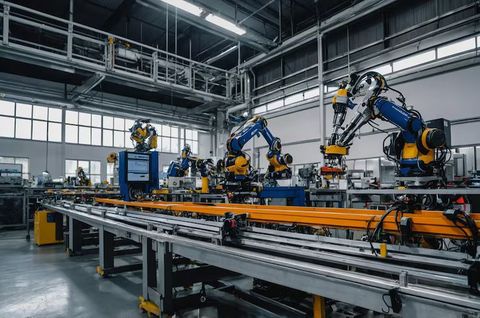
Automation systems can coordinate material loading, molding cycles, product removal, inspection, trimming, assembly, and packaging.
Robotic arms can remove molded components, place inserts, handle finished products, or transfer parts between production stations.
Plastics Manufacturing Technologies
Plastic Compounding
Compounding combines polymer resins with additives, fillers, pigments, stabilizers, fibers, or other materials to achieve specific properties.
Twin-screw extruders are commonly used for compounding because they provide controlled mixing and material dispersion.
Recycling and Reprocessing
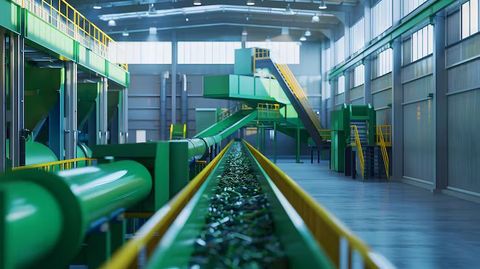
Mechanical recycling can involve sorting, shredding, washing, drying, melting, filtering, and pelletizing plastic materials.
Recycled polymers may then be incorporated into selected manufacturing processes, depending on material properties and application requirements.
Additive Manufacturing
Additive manufacturing uses digital designs to produce plastic components layer by layer. Common technologies include fused filament fabrication and other polymer-based processes.
These methods are useful for prototyping, customized components, tooling, and selected production applications.
Digital Manufacturing
Digital systems can collect machine data related to temperature, pressure, cycle time, energy use, production quantities, and equipment status.
Manufacturers can analyze this information to understand process behavior and identify opportunities for process improvement.
Industrial Applications
Automotive Manufacturing
Plastic components are used in vehicle interiors, electrical systems, exterior components, fluid-handling systems, structural applications, and under-the-hood environments.
Engineering polymers can be selected according to temperature, mechanical, chemical, and dimensional requirements.
Packaging
Plastics manufacturing supports bottles, containers, films, caps, closures, trays, protective packaging, and flexible packaging.
Injection molding, blow molding, extrusion, and thermoforming are among the processes used in packaging production.
Construction
Plastic products used in construction include pipes, fittings, insulation components, profiles, membranes, flooring materials, and protective systems.
PVC, polyethylene, polypropylene, and other polymers are used according to application requirements.
Electronics
Plastic manufacturing produces housings, connectors, insulation components, cable-related parts, switches, and protective enclosures.
Material selection can consider electrical insulation, dimensional stability, heat resistance, and flame-related requirements.
Medical Manufacturing
Medical and laboratory applications can use injection-molded components, containers, tubing, trays, housings, and other polymer products.
Manufacturing environments may require controlled conditions and specialized quality procedures depending on the product.
Consumer Products
Plastic manufacturing supports household products, storage containers, furniture components, sporting goods, appliances, toys, and numerous other products.
Production processes are selected according to product shape, material, volume, and required characteristics.
Suppliers and Manufacturing Ecosystem
The plastics manufacturing ecosystem includes polymer producers, machinery manufacturers, mold makers, automation companies, material-handling equipment manufacturers, process-control suppliers, and recycling-equipment providers.
When evaluating machinery manufacturers or equipment suppliers, organizations can examine:
- Processing technology
- Polymer compatibility
- Machine capacity
- Injection or extrusion characteristics
- Automation capabilities
- Energy consumption
- Control architecture
- Mold compatibility
- Maintenance requirements
- Safety features
- Technical documentation
Equipment selection should be based on the intended process rather than machine capacity alone.
Recent Updates
Smart Plastics Manufacturing
Industrial plants are increasingly connecting molding and extrusion machinery to digital monitoring platforms.
Machine data can be collected to track cycle times, temperatures, pressures, production quantities, and equipment conditions.
Artificial Intelligence
AI-based analytics can examine production data to identify unusual process patterns, predict selected equipment conditions, and support quality analysis.
Applications depend on data quality, process complexity, and appropriate validation.
Energy-Efficient Processing
Plastics machinery manufacturers continue to develop systems designed to reduce unnecessary energy consumption.
Electric injection molding machines, optimized heating systems, variable-speed drives, improved insulation, and process monitoring can contribute to more efficient operation.
Advanced Materials
Engineering polymers, polymer blends, reinforced plastics, and specialty compounds are expanding the range of applications for plastics.
Materials can be designed for characteristics such as higher temperature resistance, mechanical strength, chemical resistance, low weight, or electrical performance.
Automation and Machine Vision
Robots and vision systems are increasingly integrated into plastics production lines.
Vision systems can inspect dimensions, surface characteristics, assembly conditions, and selected product defects.
Circular Manufacturing
Plastics manufacturers are increasingly examining recycled materials, material recovery, design for recycling, and closed-loop production approaches.
Material selection must consider contamination, polymer compatibility, processing history, and the requirements of the intended application.
Laws or Policies
Product and Material Requirements
Plastic products may be subject to material, chemical, safety, labeling, environmental, or product-specific requirements depending on their application and jurisdiction.
Manufacturers should identify applicable requirements before selecting materials and production processes.
Worker Safety
Plastics manufacturing involves machinery, heated materials, pressure, moving components, and potentially hazardous substances.
Safety programs can address machine guarding, emergency stops, electrical protection, thermal hazards, ventilation, chemical handling, and operator training.
Environmental Management
Plastic manufacturing can generate polymer scrap, wastewater, emissions, and other industrial waste streams.
Facilities may need to comply with environmental requirements concerning waste handling, air emissions, wastewater discharge, and material storage.
Recycling Requirements
Some jurisdictions have introduced regulations concerning plastic waste, recycled content, packaging, extended producer responsibility, and material recovery.
Requirements differ substantially between markets and product categories.
Quality Management
Manufacturers supplying regulated industries may operate under formal quality-management systems. Documentation can include material specifications, process controls, inspection records, traceability, and equipment calibration.
Tools and Resources
CAD and Mold Design Software
Computer-aided design tools are used to create product geometry and mold designs. Simulation can help engineers study polymer flow, cooling, shrinkage, and potential manufacturing issues.
Process Monitoring Systems
Production monitoring platforms can track cycle time, temperature, pressure, machine status, material usage, and production quantities.
Machine Vision
Vision systems can inspect molded or extruded products automatically. Cameras and software can identify selected dimensional or visual deviations.
Material Testing Equipment
Laboratories may use tensile testers, impact testers, melt-flow instruments, moisture analyzers, hardness testers, and thermal-analysis equipment to evaluate polymer properties.
Recycling Equipment
Recycling systems can include shredders, granulators, washing equipment, dryers, melt filters, extruders, and pelletizers.
Equipment selection depends on the polymer stream and desired recycled-material characteristics.
FAQs
What is plastics manufacturing?
Plastics manufacturing is the process of converting polymer materials into finished products and components using processes such as injection molding, extrusion, blow molding, thermoforming, and rotational molding.
What machinery is used in plastics manufacturing?
Common machinery includes injection molding machines, extruders, blow molding equipment, thermoforming machines, dryers, material loaders, mixers, granulators, cooling systems, robots, and inspection equipment.
Which plastics manufacturing process is used for bottles?
Blow molding is commonly used for hollow plastic bottles and containers. Different blow-molding configurations are selected according to the material, container design, production requirements, and application.
How is automation used in plastics manufacturing?
Automation can control molding cycles, material handling, product removal, inspection, trimming, assembly, and packaging. PLCs, robots, sensors, and machine-vision systems can work together within an automated production line.
What should manufacturers consider when selecting plastics manufacturing equipment?
Important considerations include polymer type, product geometry, production volume, machine capacity, temperature and pressure requirements, mold compatibility, automation, energy use, maintenance, safety, and applicable regulations.
Conclusion
Plastics manufacturing combines polymer materials, specialized machinery, tooling, process controls, automation, and quality-management technologies to produce a broad range of industrial and consumer products. Injection molding, extrusion, blow molding, thermoforming, rotational molding, and related processes each have distinct operating principles and applications.
Modern plastics plants are increasingly incorporating robotics, machine vision, digital monitoring, advanced materials, energy-management technologies, and recycling systems. Selecting appropriate equipment requires consideration of polymer characteristics, product geometry, production requirements, environmental conditions, quality specifications, safety procedures, and applicable regulations.