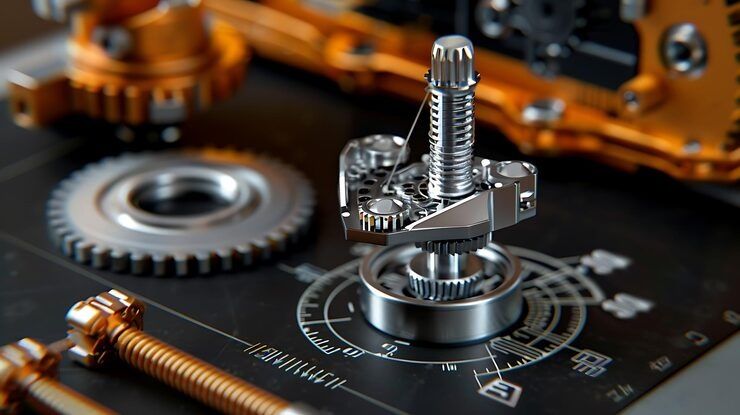
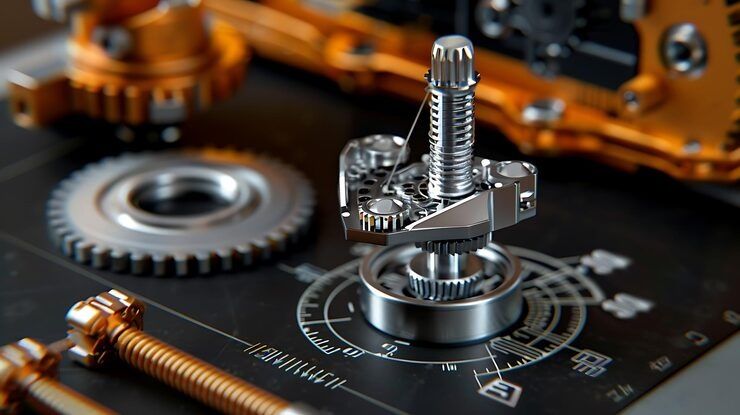
Industrial gearbox spare parts are replacement components used to maintain, repair, and restore gearbox assemblies used in machinery and production equipment. Gearboxes transmit mechanical power while changing rotational speed, torque, or direction, making their individual components important to the operation of industrial machines.
Common industrial gearbox spare parts include gears, shafts, bearings, seals, keys, couplings, housings, lubrication components, and fastening elements. Selecting the appropriate component requires attention to gearbox design, dimensions, materials, operating conditions, load requirements, and manufacturer specifications.
Context
What Are Industrial Gearbox Spare Parts?
Industrial gearbox spare parts are individual components designed to replace worn, damaged, or degraded parts within industrial transmission systems.
Gearboxes can operate continuously under significant mechanical loads. Over time, components may experience wear, fatigue, lubrication-related damage, thermal stress, or surface degradation. Replacement components can be used during planned maintenance or equipment restoration.
How Industrial Gearboxes Work
A gearbox transfers mechanical power from an input shaft to an output shaft through one or more gear stages. The gear ratio determines the relationship between input and output speed and torque.
A typical gearbox may contain:
- Input shaft
- Output shaft
- Gear sets
- Bearings
- Seals
- Housing
- Keys or splines
- Lubrication system
- Coupling components
The exact configuration depends on the gearbox type and application.
Major Types of Gearbox Spare Parts
| Spare Part | Primary Function | Typical Consideration |
|---|---|---|
| Gears | Transfer mechanical power | Tooth profile and material |
| Shafts | Support and transmit torque | Diameter and load |
| Bearings | Support rotating shafts | Load and speed rating |
| Oil Seals | Retain lubricant | Material and dimensions |
| Keys | Connect shafts and hubs | Size and fit |
| Couplings | Connect rotating components | Torque and alignment |
| Gearbox Housing | Supports internal components | Dimensions and construction |
| Gaskets | Seal mating surfaces | Material compatibility |
| Gear Rings | Transfer rotational force | Tooth geometry |
| Breathers | Manage housing pressure | Filtration and compatibility |
Importance
Why Gearbox Spare Parts Matter
Industrial gearboxes often operate in demanding environments where equipment availability is important to production activities. Damaged or worn components can affect gearbox performance and may contribute to additional equipment problems if not addressed appropriately.
Using correctly specified replacement components helps maintain the intended mechanical configuration of the gearbox.
Gears
Gears are among the most important gearbox components. Common gear arrangements include spur, helical, bevel, worm, planetary, and other specialized configurations.
Gear geometry must match the associated gear pair. Tooth profile, module, pitch, hardness, surface treatment, and dimensional accuracy can all influence performance.
Shafts
Gearbox shafts transmit torque between gear stages and connected machinery. Shafts can experience torsional, bending, and fatigue loads.
Replacement shafts should match the original dimensions, material characteristics, keyways, splines, bearing seats, and gear-mounting arrangements.
Bearings
Bearings support rotating shafts and maintain their position relative to the gearbox housing. They may be exposed to radial loads, axial loads, temperature variations, and lubrication conditions.
Bearing selection requires attention to dimensions, load characteristics, rotational speed, clearance, sealing configuration, and lubricant compatibility.
Seals and Gaskets
Seals help retain lubricant and limit the entry of contaminants. Gaskets provide sealing between stationary mating surfaces.
Seal materials may vary according to temperature, lubricant type, chemical exposure, and shaft speed.
Gearbox Types and Associated Spare Parts
Helical Gearboxes
Helical gearboxes use angled teeth that engage progressively. Spare components can include helical gears, shafts, bearings, seals, and gear wheels.
They are commonly used in conveyors, mixers, material-handling equipment, and industrial machinery.
Bevel Gearboxes
Bevel gearboxes transmit power between shafts positioned at an angle, frequently around 90 degrees.
Their replacement components require accurate matching of bevel gear geometry and associated shaft dimensions.
Worm Gearboxes
Worm gearboxes use a worm and worm wheel arrangement. Spare parts can include worm shafts, worm wheels, bearings, seals, and housing components.
Lubrication and material pairing are important considerations because sliding contact can generate heat and wear.
Planetary Gearboxes
Planetary gearboxes use sun gears, planet gears, a carrier, and a ring gear. Their compact design can provide substantial torque transmission within a relatively small package.
Replacement components require accurate dimensional and geometric matching because multiple gear elements interact within the assembly.
Gear Motors
Gear motors combine an electric motor with a gearbox. Replacement requirements can involve gearbox components, motor-side couplings, bearings, seals, shafts, or complete transmission assemblies.
Manufacturing of Gearbox Spare Parts
Gear Manufacturing
Industrial gears can be manufactured through processes such as forging, machining, hobbing, shaping, grinding, heat treatment, and surface finishing.
The selected process depends on gear size, material, precision requirements, production volume, and application.
Heat Treatment
Heat treatment can modify hardness, strength, wear resistance, and fatigue characteristics.
Processes may include carburizing, nitriding, induction hardening, or other controlled thermal treatments.
Precision Machining
Shafts, housings, bearing seats, keys, and other components require dimensional accuracy.
CNC machining, grinding, turning, milling, and other precision processes can be used according to component requirements.
Inspection and Testing
Manufacturers can use dimensional inspection, hardness testing, surface measurement, gear-profile inspection, and other quality-control methods.
For critical components, additional nondestructive testing methods may be applied according to engineering requirements.
Industrial Applications
Conveyor Systems
Gearboxes are commonly used in conveyor drives for manufacturing, warehousing, mining, packaging, and bulk-material handling.
Spare gears, bearings, seals, shafts, and couplings can be relevant to gearbox maintenance.
Material Handling
Cranes, hoists, elevators, feeders, and other material-handling systems use geared transmission systems to manage speed and torque.
Component selection needs to reflect the mechanical loads and operating cycles of the equipment.
Manufacturing Machinery
Industrial machines such as mixers, extruders, rolling equipment, machine tools, and production lines can incorporate gearboxes.
Maintenance teams may keep selected replacement components available for planned maintenance activities.
Pumps and Process Equipment
Certain pumps and process machines use gear-driven transmission arrangements. Gearbox components may need to operate under continuous loads and varying environmental conditions.
Mining Equipment
Mining machinery can involve high mechanical loads, dust, vibration, and demanding operating conditions. Gearboxes used in conveyors, crushers, feeders, and other equipment may require specialized replacement components.
Wind Energy Equipment
Wind turbines use complex transmission systems to transfer rotational energy from the rotor to the generator.
Gearbox maintenance can involve bearings, gears, shafts, seals, and other specialized components.
Suppliers and Manufacturing Ecosystem
Industrial gearbox spare-part suppliers can include original equipment manufacturers, specialized transmission-component manufacturers, authorized distributors, and industrial component producers.
When evaluating a supplier, organizations can examine:
- Gearbox model compatibility
- Component dimensions
- Material specifications
- Manufacturing tolerances
- Heat-treatment information
- Quality documentation
- Inspection procedures
- Component identification
- Delivery requirements
- Technical documentation
Accurate gearbox identification is important because visually similar components may have different dimensions or load characteristics.
Recent Updates
Digital Spare-Part Identification
Digital equipment records can associate gearbox models with individual component specifications. Asset-management platforms can store part numbers, drawings, maintenance history, and equipment information.
This can simplify component identification during maintenance planning.
Condition Monitoring
Sensors can monitor gearbox vibration, temperature, acoustic emissions, lubricant condition, and other indicators.
Condition-monitoring data can help maintenance teams identify changes in gearbox behavior and determine whether inspection may be appropriate.
Predictive Maintenance
Industrial analytics platforms can evaluate historical gearbox data to identify patterns associated with wear or developing mechanical issues.
Predictive maintenance should complement physical inspection, engineering analysis, and manufacturer recommendations.
Advanced Gear Manufacturing
Modern CNC machining, automated inspection, improved heat treatment, and computer-aided gear design can support accurate production of replacement components.
Digital measurement systems can also compare manufactured parts against defined engineering specifications.
Additive Manufacturing
Additive manufacturing is being investigated for selected industrial replacement components and low-volume applications.
Its suitability depends on material properties, dimensional requirements, mechanical loads, qualification needs, and component geometry.
Laws or Policies
Machinery Safety
Industrial gearboxes form part of larger machinery systems and therefore fall within broader machine-safety requirements. Replacement components should maintain appropriate mechanical protection and operating conditions.
Engineering Standards
Gearbox design and component manufacturing may reference standards covering gear geometry, bearings, shafts, materials, lubrication, testing, and quality requirements.
The relevant standards depend on the equipment and jurisdiction.
Workplace Safety
Maintenance activities involving gearboxes may require procedures for machine isolation, stored energy control, lifting, access, and reassembly.
Organizations should follow their applicable workplace safety procedures before maintenance activities begin.
Lubricant Management
Gearbox lubricants must be selected according to equipment specifications. Used lubricants and contaminated materials should be handled according to applicable environmental and waste-management requirements.
Tools and Resources
Gearbox Identification Plates
A gearbox nameplate can provide useful information such as model number, ratio, serial number, power rating, speed, and manufacturer identification.
These details can help identify compatible components.
Engineering Drawings
Component drawings provide dimensions, tolerances, materials, surface finishes, and other specifications.
They are particularly useful when a replacement component must match an existing assembly.
Condition-Monitoring Equipment
Vibration analyzers, thermal measurement devices, lubricant-analysis tools, and acoustic monitoring equipment can provide information about gearbox condition.
Maintenance Management Systems
CMMS and EAM platforms can maintain records of gearbox inspections, component replacements, lubrication activities, and equipment history.
Spare-Part Catalogs
Manufacturer catalogs and technical documentation can provide part numbers, dimensions, compatible gearbox models, and assembly information.
FAQs
What are industrial gearbox spare parts?
Industrial gearbox spare parts are replacement components used to maintain or restore gearbox assemblies. They include gears, shafts, bearings, seals, keys, couplings, housings, and other components.
Which gearbox components commonly require replacement?
Gears, bearings, seals, shafts, keys, gaskets, couplings, and lubrication-related components may require replacement depending on operating conditions and maintenance findings.
How do I identify the correct gearbox spare part?
Start with the gearbox manufacturer, model, serial number, ratio, component identification, engineering drawings, and dimensional specifications. Matching the exact gearbox configuration is important.
What materials are used for gearbox spare parts?
Materials vary by component and application. Gear and shaft materials may include alloy steels, while seals, gaskets, housings, and bearing components use materials selected for their particular operating requirements.
How can gearbox condition be monitored?
Vibration monitoring, temperature measurement, lubricant analysis, acoustic monitoring, and visual inspection can provide information about gearbox condition.
Conclusion
Industrial gearbox spare parts support the maintenance and continued operation of mechanical transmission systems used across manufacturing, material handling, mining, energy, process industries, and other industrial applications. Gears, shafts, bearings, seals, couplings, housings, and related components each have specific dimensional and material requirements.
Modern manufacturing technologies, digital equipment records, condition monitoring, precision machining, and maintenance analytics are changing how replacement components are identified and managed. Correct component selection should be based on gearbox identification, engineering specifications, operating conditions, material compatibility, and applicable maintenance procedures.