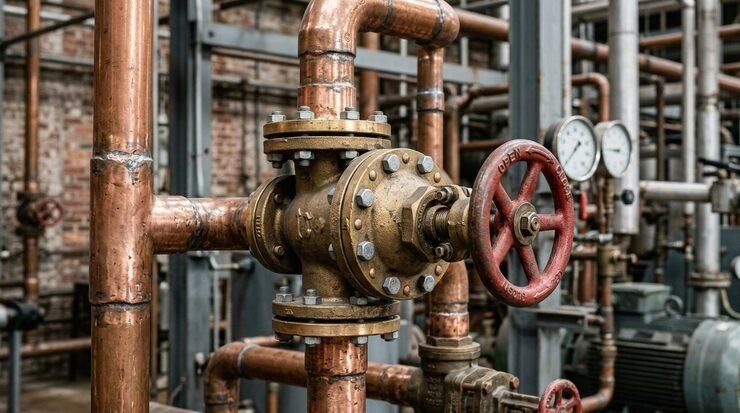
Industrial valves are mechanical devices used to start, stop, direct, isolate, regulate, or control the flow of liquids, gases, slurries, and other process fluids. They are essential components in pipelines, process plants, water systems, power facilities, chemical plants, refineries, manufacturing facilities, and many other industrial environments.
Industrial valve systems can range from simple manually operated isolation valves to sophisticated automated control valves equipped with actuators, positioners, sensors, and digital control interfaces.
Valve selection depends on factors such as fluid characteristics, pressure, temperature, flow requirements, pipe size, corrosion conditions, operating frequency, and process-control requirements.
What Are Industrial Valves?
Industrial valves are flow-control devices installed within piping and process systems.
Their primary functions include:
Starting or stopping fluid flow
Regulating flow rate
Controlling pressure
Changing flow direction
Preventing reverse flow
Isolating equipment
Managing process conditions
Protecting pipelines and equipment
A typical industrial valve consists of a body, internal flow-control component, stem or shaft, sealing elements, and an operating mechanism.
Automated valves may additionally include pneumatic, electric, hydraulic, or electro-hydraulic actuators.
How Industrial Valves Work
The operating principle varies according to valve design.
Isolation
Isolation valves are primarily used to completely open or close a pipeline.
Gate valves, ball valves, and butterfly valves can be used for isolation applications depending on the process.
Flow Regulation
Control valves modify the available flow passage to regulate flow according to process requirements.
They are commonly integrated with sensors and control systems.
Directional Flow Control
Certain valve arrangements direct fluid between different process lines.
Multi-port ball valves and specialized directional valves can perform this function.
Reverse-Flow Prevention
Check valves allow fluid to move primarily in one direction and automatically respond when reverse flow occurs.
Pressure Protection
Pressure-relief and safety valves can release fluid when pressure reaches a specified condition, helping protect equipment and piping systems.
Major Types of Industrial Valves
Gate Valves
Gate valves use a movable gate to open or close the flow passage.
They are commonly used for isolation rather than continuous throttling.
Applications include:
Water pipelines
Oil and gas systems
Power plants
Industrial process piping
Utility systems
Globe Valves
Globe valves use a movable disc or plug and a shaped seat to regulate flow.
They are frequently used where flow control is required.
Ball Valves
Ball valves use a rotating spherical element with a passage through its center.
A quarter-turn rotation can move the valve between open and closed positions.
Ball valves are widely used for isolation and selected control applications.
Butterfly Valves
Butterfly valves use a rotating disc positioned within the flow path.
They offer a compact design and are frequently used in large-diameter pipelines.
Applications include water treatment, HVAC, chemical processing, and industrial utilities.
Check Valves
Check valves prevent or limit reverse flow.
Common configurations include:
Swing check valves
Lift check valves
Wafer check valves
Dual-plate check valves
Piston check valves
Plug Valves
Plug valves use a cylindrical or tapered plug that rotates inside the valve body.
They can be used for isolation and selected process applications involving liquids, gases, and slurries.
Diaphragm Valves
Diaphragm valves use a flexible diaphragm to control the flow path.
They can be useful where fluid isolation from internal mechanical components is important.
Needle Valves
Needle valves use a slender, tapered element to provide precise flow adjustment.
They are commonly used in instrumentation and small-flow applications.
Safety and Relief Valves
These valves provide pressure protection by opening under defined pressure conditions.
They are widely used in pressure vessels, boilers, process equipment, and industrial piping.
Industrial Valve Types Comparison
| Valve Type | Main Function | Common Applications |
|---|---|---|
| Gate Valve | Isolation | Pipelines, utilities |
| Globe Valve | Flow regulation | Process systems |
| Ball Valve | Isolation and switching | Oil, gas, chemicals |
| Butterfly Valve | Isolation and regulation | Water, HVAC |
| Check Valve | Reverse-flow prevention | Pumps and pipelines |
| Plug Valve | Isolation | Process industries |
| Diaphragm Valve | Flow control/isolation | Chemical and sanitary processes |
| Needle Valve | Precise flow control | Instrumentation |
| Safety Valve | Pressure protection | Boilers and pressure systems |
Valve Actuation Technologies
Industrial valves can be operated manually or automatically.
Manual Actuation
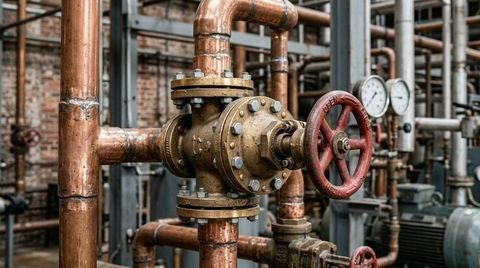
Manual valves use handwheels, levers, or gear mechanisms.
They are suitable where frequent automated operation is not required.
Pneumatic Actuation
Pneumatic actuators use compressed air to move the valve.
They are widely used in process automation because of their rapid response and compatibility with industrial control systems.
Electric Actuation
Electric actuators use motors to open, close, or position valves.
They can be integrated with PLCs, distributed control systems, and building or process automation systems.
Hydraulic Actuation
Hydraulic actuators use pressurized fluid to generate high mechanical force.
They can be useful for large valves or demanding operating environments.
Control Valve Technologies
Control valves continuously adjust flow according to a control signal.
A typical automated control-valve assembly can include:
Valve body
Trim
Actuator
Positioner
Control signal interface
Feedback mechanism
The control system receives process information from sensors and adjusts the valve position to maintain the desired process condition.
Key Industrial Valve Components
Valve Body
The body provides the primary pressure-containing structure and contains the internal flow passage.
Valve Trim
Trim generally refers to internal components that directly influence fluid flow.
Depending on valve design, these can include discs, plugs, balls, seats, cages, stems, and related parts.
Stem or Shaft
The stem or shaft transfers movement from the actuator or manual mechanism to the internal flow-control element.
Seats
Seats provide the sealing interface between moving and stationary valve components.
Seals and Packing
Sealing systems help limit leakage around moving components and valve connections.
Actuator
An actuator provides the mechanical force required to operate an automated valve.
Industrial Valve Manufacturing Processes
Valve manufacturing combines metalworking, machining, casting or forging, assembly, testing, and surface treatment.
Engineering and Design
Engineers determine valve geometry according to:
Pressure rating
Temperature
Pipe size
Flow requirements
Fluid characteristics
Material compatibility
Operating frequency
Connection configuration
Casting
Valve bodies can be produced through casting processes for appropriate designs and sizes.
Casting can produce complex internal and external geometries.
Forging
Forged valve components are produced by shaping metal under controlled mechanical forces.
Forging can provide specific strength and structural characteristics for selected valve applications.
CNC Machining
Precision machining is used to manufacture valve bodies, stems, seats, plugs, balls, shafts, and other components.
CNC turning, milling, drilling, boring, grinding, and related processes can be used.
Surface Treatment
Components may receive surface treatments to improve corrosion resistance, wear resistance, sealing performance, or compatibility with process conditions.
Possible treatments include:
Polishing
Coating
Plating
Passivation
Hard-facing
Specialized surface finishing
Assembly
Valve assembly involves installing internal components, seals, packing, actuators, springs, fasteners, and other parts.
Testing
Industrial valves can undergo different tests depending on design and application.
Testing may include:
Pressure testing
Shell testing
Seat leakage testing
Functional testing
Dimensional inspection
Material verification
Actuator testing
Materials Used in Industrial Valves
Material selection depends on pressure, temperature, corrosion, erosion, fluid composition, and operating conditions.
Common materials include:
Carbon steel
Stainless steel
Cast iron
Ductile iron
Alloy steel
Bronze
Brass
Nickel-based alloys
Titanium
Engineering polymers
Specialized alloys can be used in high-temperature, corrosive, or chemically aggressive environments.
Factors Affecting Industrial Valve Selection
Pressure Rating
The valve must be appropriate for the operating and design pressure of the process system.
Temperature
Material and seal selection must account for operating temperature and temperature variations.
Fluid Characteristics
The fluid may be corrosive, abrasive, toxic, viscous, flammable, or contain suspended solids.
Flow Requirements
Valve geometry affects flow capacity, pressure loss, and controllability.
Valve Size
The valve size must correspond to the piping configuration and process requirements.
Operating Frequency
Frequently operated valves may require different actuation and durability characteristics than valves used only occasionally.
Leakage Requirements
Some applications require tight shutoff and specific leakage-control characteristics.
Industrial Applications of Valves
Oil and Gas
Valves are used throughout upstream, midstream, and downstream systems.
Applications include:
Gathering systems
Pipelines
Processing plants
Refineries
Storage facilities
Gas-processing systems
Chemical Processing
Chemical plants use valves to control process fluids, reactants, solvents, acids, bases, gases, and other chemicals.
Power Generation
Valves are used in steam, cooling water, feedwater, fuel, condensate, and auxiliary systems.
Water and Wastewater Treatment
Valve applications include water distribution, filtration, pumping, chemical dosing, sludge handling, and treatment processes.
Food and Beverage
Sanitary valve systems can be used for processing, cleaning, fluid transfer, and hygienic applications.
Pharmaceutical Manufacturing
Specialized valves can be used in process-fluid handling, sterile processes, cleaning systems, and pharmaceutical production equipment.
Mining and Minerals
Valves are used for slurry, water, chemical, and process-fluid handling.
HVAC and Building Systems
Butterfly, ball, globe, and other valves can regulate water and other fluids in heating and cooling systems.
Smart Industrial Valves
Modern industrial valve systems increasingly incorporate sensors and digital technologies.
Smart valve assemblies can monitor:
Valve position
Pressure
Temperature
Actuator condition
Operating cycles
Leakage indicators
Diagnostic information
Digital positioners can provide feedback to plant control systems and support condition monitoring.
Industrial Valves and Automation
Automated valve systems can be integrated with:
PLC systems
Distributed control systems
SCADA systems
Industrial Ethernet
Remote monitoring platforms
Safety instrumented systems
Automation can allow operators to control valves from centralized control rooms and coordinate valve movement with other process equipment.
Global Industrial Valve Manufacturers and Suppliers
The global industrial-valve industry includes manufacturers specializing in general-purpose valves, process-control valves, oil and gas equipment, water infrastructure, power systems, and specialized flow-control technologies.
Examples include:
Emerson
Flowserve
Baker Hughes
IMI
Metso
KITZ Corporation
Velan
Suppliers may provide valve bodies, actuators, control valves, isolation valves, safety valves, replacement components, automation systems, and engineered valve assemblies.
How to Select an Industrial Valve
A structured selection process should consider both the fluid and the operating environment.
Important factors include:
Valve type
Nominal pipe size
Pressure rating
Operating temperature
Fluid composition
Flow rate
Corrosion potential
Erosion potential
Required shutoff characteristics
Actuation method
Connection type
Maintenance requirements
The correct valve depends on the specific process conditions rather than valve type alone.
Maintenance of Industrial Valves
Regular inspection can help identify developing problems.
Typical maintenance activities include checking:
Valve leakage
Packing and seals
Actuator operation
Stem condition
Seat condition
Corrosion
External damage
Position feedback
Lubrication where applicable
Connection integrity
Automated valve systems can also use diagnostic data to identify abnormal operating conditions.
Frequently Asked Questions
1. What are industrial valves?
Industrial valves are mechanical devices used to control, isolate, regulate, direct, or protect the flow of liquids, gases, slurries, and other process fluids.
2. What are the main types of industrial valves?
Common types include gate valves, globe valves, ball valves, butterfly valves, check valves, plug valves, diaphragm valves, needle valves, and safety or relief valves.
3. What materials are used to manufacture industrial valves?
Common materials include carbon steel, stainless steel, cast iron, ductile iron, alloy steel, bronze, brass, nickel-based alloys, titanium, and engineering polymers.
4. What industries use industrial valves?
Oil and gas, chemical processing, power generation, water treatment, pharmaceuticals, food and beverage, mining, manufacturing, HVAC, and many other industries use industrial valves.
5. What factors should be considered when selecting an industrial valve?
Pressure, temperature, fluid composition, flow rate, pipe size, corrosion, erosion, leakage requirements, actuation method, connection type, and maintenance requirements are important considerations.
Conclusion
Industrial valves are fundamental components of modern fluid-handling and process-control systems. They regulate, isolate, direct, and protect flows across pipelines and process equipment in industries ranging from oil and gas and chemical processing to water treatment, power generation, pharmaceuticals, food production, and mining.
Gate, globe, ball, butterfly, check, plug, diaphragm, needle, and safety valves each provide different operating characteristics. Automated actuation through pneumatic, electric, or hydraulic technologies further expands their role in industrial process control.
Manufacturing involves engineering design, casting, forging, precision machining, surface treatment, assembly, inspection, and pressure or leakage testing. Material selection is equally important because valves must operate reliably under specific pressure, temperature, corrosion, erosion, and fluid conditions.
As industrial facilities increasingly adopt automation and digital monitoring, smart valve technologies are becoming more integrated with PLC, DCS, SCADA, and process-control systems, supporting more connected and measurable fluid-management operations.