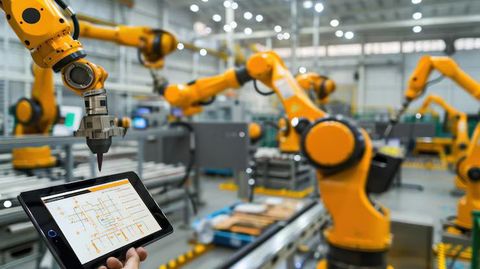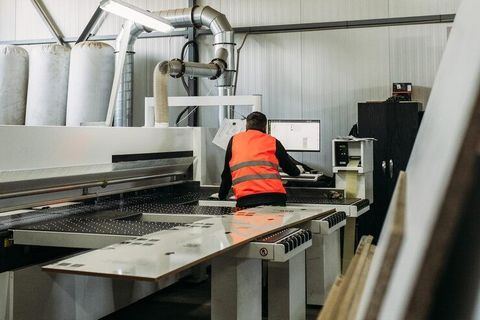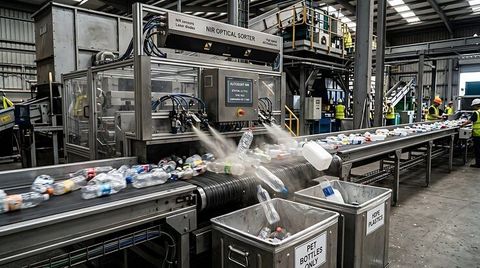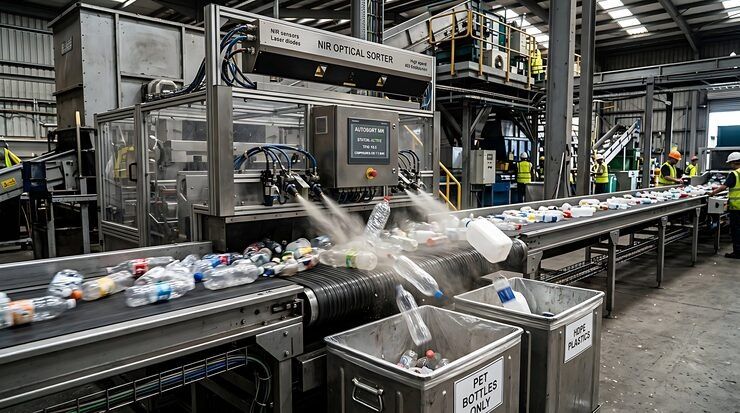
A plastic manufacturing plant is an industrial facility where polymer materials are processed into finished or semi-finished products such as containers, pipes, films, sheets, automotive components, packaging materials, household products, and industrial parts. Depending on the product, a plant may use injection molding, extrusion, blow molding, thermoforming, rotational molding, or other plastic-processing technologies.
A modern facility typically combines raw-material handling, processing machinery, molds or dies, cooling systems, automation, quality-control equipment, material handling, utilities, and packaging operations.
Why Plastic Manufacturing Plants Matter
Plastics are used across packaging, construction, automotive, electronics, healthcare, agriculture, consumer products, and industrial manufacturing. A plastic manufacturing plant converts polymer feedstock into products with specific shapes, dimensions, mechanical properties, and surface characteristics.
The plant configuration depends on:
- Polymer type
- Product design
- Production volume
- Required dimensions
- Processing technology
- Mold or die design
- Cooling requirements
- Automation level
- Quality specifications
- Packaging requirements
A facility producing plastic bottles will have a substantially different production system from one manufacturing automotive components or plastic pipes.
Plastic Manufacturing Processes
Plastic production generally involves preparing polymer material, melting or softening it, forming it into the desired geometry, cooling or curing it, and completing finishing and inspection operations.
Raw Material Preparation
Plastic resins are commonly received as pellets, granules, powders, or other forms. Materials may include thermoplastics such as polyethylene, polypropylene, PVC, PET, polystyrene, and engineering polymers.
Material handling equipment can include silos, hoppers, conveyors, loaders, dryers, mixers, and dosing systems.
Some polymers require controlled drying before processing because moisture can affect product quality and processing performance.
Injection Molding
Injection molding is widely used for producing discrete plastic components.
The basic sequence is:
Material Feeding → Plasticizing → Injection → Mold Filling → Cooling → Mold Opening → Part Ejection
The process can produce complex components with repeatable dimensions.
Applications include:
- Automotive components
- Electrical housings
- Medical products
- Consumer products
- Packaging components
- Industrial parts
Extrusion
Plastic extrusion continuously pushes molten polymer through a die to create products with a constant cross-sectional profile.
Common extruded products include:
- Plastic pipes
- Tubes
- Sheets
- Films
- Profiles
- Cables and insulation
- Compounded materials
An extrusion line may include an extruder, die, cooling system, sizing equipment, haul-off system, and cutting or winding equipment.
Blow Molding
Blow molding produces hollow plastic products by expanding a heated polymer preform or parison inside a mold.
It is commonly used for:
- Bottles
- Containers
- Tanks
- Industrial hollow components
Major technologies include extrusion blow molding, injection blow molding, and stretch blow molding.
Thermoforming
Thermoforming heats a plastic sheet until it becomes sufficiently pliable and then forms it over or into a mold.
It is used for products such as:
- Food trays
- Packaging containers
- Disposable products
- Appliance components
- Industrial covers
Rotational Molding
Rotational molding produces hollow components by heating polymer material inside a rotating mold.
The process can be used for tanks, containers, playground components, agricultural products, and other large hollow parts.
Major Plastic Processing Technologies
| Technology | Main Principle | Typical Products |
|---|---|---|
| Injection Molding | Molten polymer injected into mold | Components, housings, containers |
| Extrusion | Polymer pushed through a die | Pipes, films, sheets, profiles |
| Blow Molding | Heated polymer expanded inside mold | Bottles, tanks, hollow containers |
| Thermoforming | Heated sheet formed using mold | Trays, packaging, covers |
| Rotational Molding | Polymer formed inside rotating mold | Tanks, large hollow products |
| Compression Molding | Material formed under pressure and heat | Components, composites |
| Film Blowing | Extruded polymer formed into tubular film | Packaging films |
| Calendering | Polymer processed through heated rollers | Sheets, films, coated materials |
Plastic Manufacturing Machinery and Equipment
A plastic manufacturing plant can contain many different machine categories.
| Equipment | Function | Applications |
|---|---|---|
| Injection Molding Machine | Forms molded components | Automotive, packaging, consumer products |
| Extruder | Melts and pushes polymer through a die | Pipes, films, profiles |
| Blow Molding Machine | Produces hollow products | Bottles, containers |
| Thermoforming Machine | Forms heated plastic sheets | Trays and packaging |
| Plastic Dryer | Removes moisture | Hygroscopic polymers |
| Material Loader | Transfers polymer to processing machines | Automated material handling |
| Mixer/Blender | Combines polymers and additives | Compounding and processing |
| Granulator | Reduces plastic scrap | Recycling and reprocessing |
| Cooling System | Removes process heat | Injection and extrusion |
| Mold | Defines product geometry | Injection and molding |
| Die | Shapes extruded material | Pipes, sheets, profiles |
| Robotic System | Automates handling | Part removal and packaging |
| Inspection System | Checks product quality | Automated production |
| Packaging Machine | Packages finished products | Retail and industrial products |
Plastic Manufacturing Plant Layout
Plant layout should allow materials and products to move efficiently through the production process.
A typical arrangement may include:
Raw Material Storage → Material Preparation → Processing Machines → Cooling/Finishing → Inspection → Packaging → Finished Product Storage
Supporting areas may include maintenance workshops, utilities, quality-control laboratories, offices, waste-handling areas, and equipment-access zones.
Machine placement should account for material flow, operator access, maintenance clearance, ventilation, electrical requirements, cooling-water connections, compressed air, and other utilities.
Automation and Process Control
Automation plays an important role in modern plastic manufacturing plants.
Control systems can monitor and adjust:
- Barrel temperature
- Mold temperature
- Injection pressure
- Injection speed
- Screw speed
- Extrusion output
- Cooling temperature
- Cycle time
- Material feed rate
- Product dimensions
Robotic systems can perform part removal, assembly, trimming, inspection, palletizing, and packaging.
Industrial data systems can also collect production information for quality monitoring, equipment performance analysis, and process optimization.
Quality Control in Plastic Manufacturing
Quality control is required to verify that finished products meet defined specifications.
Common inspection parameters include:
- Dimensions
- Weight
- Wall thickness
- Surface appearance
- Color
- Strength
- Hardness
- Impact resistance
- Leak performance
- Material properties
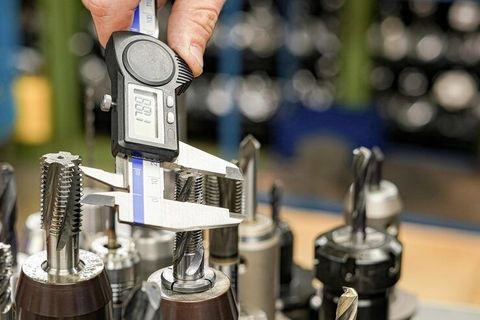
Depending on the application, plants may use dimensional measurement equipment, vision inspection, laboratory testing, leak testers, and other specialized systems.
Global Plastic Manufacturing Machinery Manufacturers and Suppliers
The global plastic-processing machinery market includes manufacturers supplying injection molding machines, extrusion systems, blow molding equipment, auxiliary equipment, automation, and complete production solutions.
ENGEL develops injection molding machinery and automation systems for plastics processing.
Husky Technologies provides injection molding systems and related technologies, particularly for packaging and other high-volume plastic applications.
KraussMaffei supplies technologies covering injection molding, extrusion, and reaction processing.
Battenfeld-Cincinnati develops extrusion systems for applications such as pipes, profiles, sheets, and other plastic products.
Milacron provides injection molding and related plastics-processing technologies.
Other suppliers specialize in dryers, chillers, material handling, robots, granulators, molds, dies, inspection equipment, and packaging systems.
The appropriate supplier depends on the polymer, product geometry, production capacity, required automation, processing technology, and technical specifications.
How to Select Plastic Manufacturing Equipment
1. Define the Product
Start with the finished product's dimensions, weight, geometry, material, surface requirements, and production volume.
2. Select the Polymer
Different polymers have different processing temperatures, flow characteristics, drying requirements, shrinkage behavior, and mechanical properties.
3. Choose the Processing Technology
Determine whether injection molding, extrusion, blow molding, thermoforming, rotational molding, or another process is appropriate.
4. Determine Production Capacity
Calculate the required output and cycle time. Machine capacity should align with the desired production rate.
5. Evaluate Mold or Die Requirements
For molding applications, mold design strongly influences product quality, cycle time, cooling, and machine requirements.
6. Consider Automation
Determine whether material loading, part removal, inspection, trimming, assembly, and packaging should be automated.
7. Plan Utilities
Evaluate electricity, cooling water, compressed air, ventilation, temperature control, and other utility requirements before finalizing equipment.
Plastic Manufacturing Plant Cost and Pricing Factors
The plastic manufacturing plant cost varies significantly according to production capacity, processing technology, machinery selection, automation, building requirements, utilities, molds, material-handling systems, and quality-control infrastructure.
Major factors can include:
- Injection molding machine capacity
- Extrusion-line size
- Number of production machines
- Mold and die requirements
- Automation level
- Material handling
- Cooling systems
- Electrical infrastructure
- Factory building
- Quality-control equipment
- Packaging systems
- Installation and commissioning
A small production workshop and a highly automated industrial facility can have very different equipment configurations and capital requirements.
Industrial Applications
Plastic manufacturing plants supply products for numerous industries.
Packaging
Plastic manufacturing facilities produce bottles, containers, caps, closures, films, trays, and other packaging products.
Automotive
Injection molding and other technologies produce dashboards, interior components, housings, trim, ducts, and other vehicle components.
Construction
Plastic pipes, profiles, fittings, insulation components, sheets, and other construction products are manufactured using extrusion and molding technologies.
Healthcare
Plastic-processing facilities manufacture selected medical containers, housings, disposable components, laboratory products, and packaging.
Electronics
Plastic housings, connectors, insulation components, protective covers, and other parts can be produced using precision molding.
Agriculture
Plastic products include irrigation pipes, tanks, trays, films, containers, and agricultural components.
Sustainability and Plastic Recycling
Many plastic manufacturing plants incorporate systems for recovering production scrap. Regrinding equipment can reduce suitable internal process waste into reusable material, depending on product specifications and material requirements.
Recycled polymers can also be incorporated into selected manufacturing processes where technical specifications permit.
Recycling systems may include:
- Granulators
- Shredders
- Washers
- Dryers
- Extruders
- Pelletizers
- Sorting systems
Material selection and recycling strategy should consider contamination, polymer compatibility, required product properties, and applicable regulations.
Best Practices for Plastic Manufacturing Plants
Effective plant operation involves coordinated management of machinery, materials, people, utilities, and quality systems.
- Maintain processing temperatures within specified ranges.
- Monitor machine parameters and cycle times.
- Keep molds and dies properly maintained.
- Control raw-material moisture where required.
- Inspect products throughout production.
- Maintain cooling and temperature-control systems.
- Follow equipment maintenance schedules.
- Monitor energy and material consumption.
- Control production scrap and reprocessing.
- Maintain appropriate workplace and process safety procedures.
Frequently Asked Questions
What is a plastic manufacturing plant?
A plastic manufacturing plant is an industrial facility where polymers are processed into finished or semi-finished products using technologies such as injection molding, extrusion, blow molding, and thermoforming.
What machines are used in plastic manufacturing?
Common machines include injection molding machines, extruders, blow molding machines, thermoforming equipment, dryers, material loaders, mixers, cooling systems, granulators, robots, molds, and inspection systems.
What is the plastic manufacturing process?
The process generally involves raw-material preparation, polymer processing, forming, cooling or curing, finishing, inspection, and packaging. The exact sequence depends on the plastic product and processing technology.
What factors affect plastic manufacturing plant cost?
Plant cost depends on production capacity, machinery, processing technology, molds and dies, automation, building requirements, utilities, material handling, quality-control systems, and installation requirements.
How do I choose plastic manufacturing machinery?
Start with the product design, polymer, production volume, required dimensions, processing technology, cycle time, automation requirements, utilities, and quality specifications. Equipment should be selected as part of an integrated production system.
Conclusion
A plastic manufacturing plant combines material preparation, polymer-processing machinery, molds or dies, cooling systems, automation, quality control, and packaging operations to convert polymer materials into useful industrial and consumer products.
The appropriate plant configuration depends on the product, polymer, production capacity, processing technology, automation level, quality requirements, and utility infrastructure. From injection molding and extrusion to blow molding, thermoforming, and recycling, each technology serves different manufacturing requirements. A coordinated approach to equipment selection, plant layout, process control, and maintenance can support consistent plastic production across diverse industrial applications.