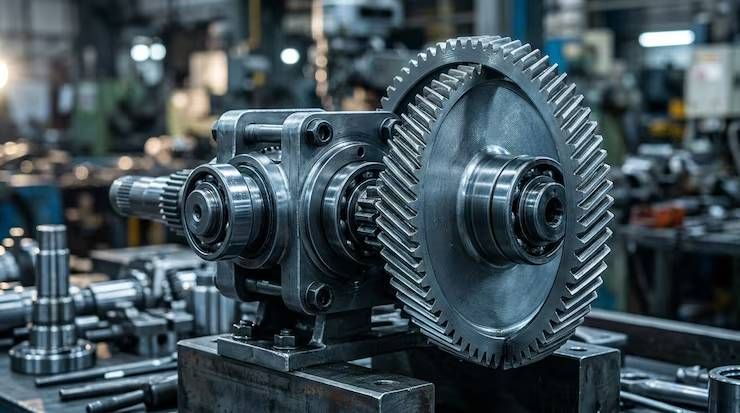
Mechanical machinery plays an important role in modern industry, construction, agriculture, transportation, and manufacturing. It includes machines and mechanical equipment designed to produce movement, transfer force, process materials, or perform specific physical tasks.
The development of mechanical machinery began with simple devices such as levers, pulleys, wheels, and gears. Over time, advances in metallurgy, engineering, electricity, and computer technology led to more complex equipment. Modern machines combine mechanical components with electrical controls, sensors, hydraulic systems, pneumatic mechanisms, and digital monitoring technologies.
Today, mechanical machinery includes equipment used for material processing, metal fabrication, material handling, power transmission, packaging, and precision manufacturing. The type of machinery required depends on the intended application, operating environment, production capacity, and technical specifications.
Main types of mechanical machinery
Mechanical machinery can be grouped into several categories according to its function.
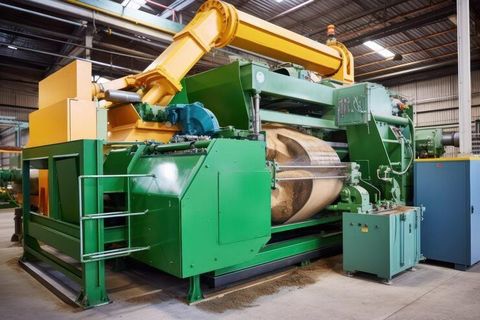
Material processing machinery: Equipment used to cut, grind, crush, mix, or transform raw materials into usable forms.
Machine tools: Lathes, milling machines, drilling machines, and grinding machines used to manufacture or finish mechanical components.
Material handling equipment: Conveyors, hoists, cranes, and mechanical lifting systems used to move goods and industrial materials.
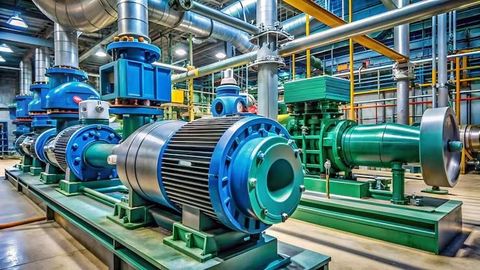
Pumps and compressors: Machines that move liquids or gases or increase gas pressure for industrial processes.
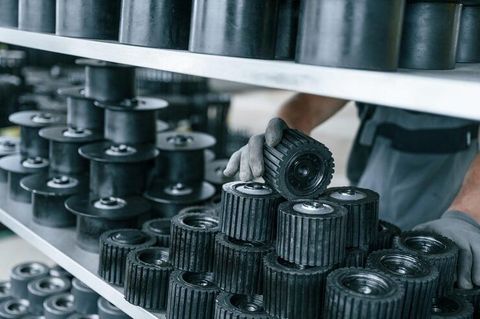
Power transmission equipment: Gears, bearings, couplings, shafts, and belt drives that transfer motion and mechanical power.
Hydraulic and pneumatic machinery: Systems that use pressurized liquids or compressed air to generate movement and force.
Industrial automation equipment: Mechanisms, actuators, and machine systems that perform operations with limited manual intervention.
Each category serves different operational requirements. A metalworking facility may use CNC machine tools, while a food processing plant may depend on mixing equipment, conveyors, pumps, and packaging machinery.
How mechanical machinery works
Most mechanical machines operate by transferring or converting energy into useful motion or force. An electric motor, for example, converts electrical energy into rotational motion, which can drive a pump, conveyor, or cutting tool.
Gears, belts, chains, shafts, and bearings help transmit movement between components. Hydraulic cylinders can produce substantial linear force, while pneumatic actuators use compressed air to move mechanical parts. The design of these components influences machine speed, precision, load capacity, and operating behavior.
Modern equipment may also include sensors and electronic controllers. These components monitor operating conditions, regulate movement, and help operators identify abnormal performance.
Importance
Mechanical machinery is essential because many industrial activities require controlled force, repeatable movement, precise dimensions, or continuous material processing. Manual methods may be suitable for small tasks, but larger production operations often require specialized equipment to maintain consistent output and manage demanding workloads.
Manufacturers, construction companies, agricultural operators, maintenance teams, and logistics facilities all rely on machinery suited to their operational needs. Mechanical systems also support essential infrastructure, including water distribution, power generation, transportation, and waste processing.
Benefits and practical applications
Mechanical machinery addresses several common operational challenges.
Production consistency: Machine tools and automated equipment can repeat defined operations with controlled dimensions and process settings.
Material movement: Conveyors, cranes, and lifting systems reduce the need to move heavy materials manually.
Precision processing: CNC machinery and specialized tools can produce components according to specified engineering drawings.
Process efficiency: Pumps, compressors, and material processing equipment support continuous or large-scale operations.
Workplace safety: Properly designed mechanical systems can reduce exposure to heavy lifting and certain hazardous tasks.
Equipment maintenance: Monitoring systems and inspection procedures help identify wear, vibration, overheating, and other operating problems.
These outcomes depend on equipment selection, installation, operator training, maintenance practices, and production conditions. Machinery can introduce risks when it is incorrectly operated, poorly maintained, or used outside its intended specifications.
Mechanical machinery across industries
Different industries use mechanical equipment for distinct purposes.
In manufacturing, lathes, milling machines, presses, industrial mixers, and automated assembly systems produce components and finished goods. In construction, excavators, cranes, concrete mixers, and earthmoving machinery support building and infrastructure projects.
Agriculture relies on tractors, harvesters, irrigation pumps, and soil preparation equipment. Energy facilities use turbines, compressors, pumps, and mechanical drive systems. Warehouses and distribution centers use conveyor systems, pallet handling equipment, and industrial lifting devices to move products through storage and dispatch operations.
Common machinery categories and their uses
Machinery category | Main function | Typical applications |
|---|---|---|
CNC machine tools | Precision cutting and shaping | Automotive and aerospace components |
Industrial pumps | Transfer liquids | Water treatment and chemical processing |
Air compressors | Supply compressed air | Manufacturing and pneumatic systems |
Hydraulic presses | Apply controlled compressive force | Metal forming and component production |
Conveyor systems | Move materials between locations | Warehousing and production lines |
Industrial gearboxes | Adjust torque and rotational speed | Machinery drives and material handling |
Industrial mixers | Combine materials | Food, chemical, and pharmaceutical production |
The table provides general examples. Specific machine designs and operating requirements vary according to the material being processed, production environment, and applicable engineering standards.
Recent Updates
Mechanical machinery continues to evolve through improvements in automation, energy management, materials, precision engineering, and digital monitoring. Recent industry developments emphasize better integration between physical equipment and software, alongside efforts to improve reliability and reduce unnecessary resource consumption.
Digital technologies in mechanical machinery
Sensors and industrial Internet of Things technologies allow machines to communicate operating information to monitoring systems. Temperature, vibration, pressure, rotational speed, and energy consumption can be measured to help operators understand equipment conditions.
Predictive maintenance systems analyze operating data to identify patterns associated with potential mechanical problems. This approach can complement scheduled inspections and conventional maintenance procedures. However, predictions depend on data quality, machine characteristics, and appropriate interpretation.
Computer numerical control (CNC) equipment is also becoming more closely integrated with design and production software. Digital manufacturing workflows can connect engineering drawings, machining instructions, inspection records, and production planning. This helps organizations maintain better visibility across manufacturing activities.
Robotics and advanced manufacturing
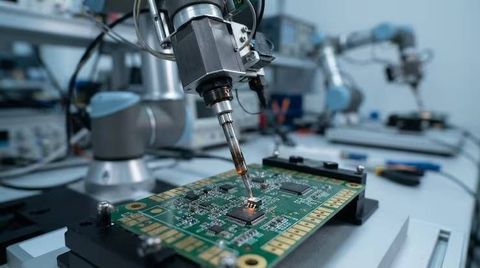
Industrial robots are used for welding, material handling, assembly, painting, and other repetitive tasks. Collaborative robots are designed for particular applications in which people and robotic systems work in nearby areas under defined safety conditions.
Additive manufacturing, commonly called 3D printing, provides another approach to producing mechanical components. It builds parts layer by layer from digital designs and can support complex geometries, prototypes, and selected production applications. Conventional machining, casting, forging, and molding remain important because each manufacturing method has different material, dimensional, and production requirements.
Energy efficiency and equipment reliability
Industrial facilities are paying greater attention to motor efficiency, compressed-air leakage, hydraulic losses, and unnecessary machine operation. Variable-frequency drives can adjust motor speed to match changing operating demands in suitable applications. Improved lubrication, alignment, and vibration monitoring can also support mechanical reliability.
These developments do not mean that every modern machine requires advanced digital controls. Simple equipment can remain appropriate where operating conditions are stable and monitoring requirements are limited. Technology selection depends on the specific production task and the complexity of the operating environment.
Laws or Policies
Mechanical machinery is affected by regulations and technical standards covering equipment safety, electrical systems, workplace conditions, environmental performance, and product quality. Requirements depend on the machine category, its intended use, the location of operation, and whether it is manufactured, imported, installed, or modified.
Machinery safety requirements in India
In India, applicable workplace and factory requirements govern aspects of machinery operation, worker protection, and industrial safety. The Occupational Safety, Health and Working Conditions Code, 2020, forms part of the country's labour-law framework. Its application depends on commencement provisions, applicable rules, and the nature of the establishment.
Factories and industrial facilities may need appropriate machine guarding, emergency stopping arrangements, safe operating procedures, inspection practices, and worker training. Electrical machinery may also be subject to relevant electrical safety requirements. The exact obligations vary by equipment type and operating environment.
Machinery used in particular industries may have additional requirements. For example, lifting equipment, pressure systems, food processing machinery, and equipment used in hazardous environments may be subject to specific technical or regulatory considerations.
International engineering standards
International standards provide guidance for designing, manufacturing, operating, and maintaining mechanical equipment.
ISO 12100: Addresses machinery safety and risk assessment principles.
ISO 9001: Provides requirements for quality management systems.
ISO 13849: Addresses safety-related parts of machinery control systems.
IEC 60204-1: Covers electrical equipment of machines.
ISO 50001: Provides a framework for energy management systems.
These standards have different purposes and are not automatically mandatory in every location. Their applicability may depend on legislation, contractual requirements, certification arrangements, or an organization's engineering practices.
Tools and Resources
Mechanical engineering professionals use technical references, design software, maintenance records, and measurement instruments to select and manage machinery. The appropriate resources depend on whether the task involves equipment design, procurement evaluation, operation, or maintenance.
Mechanical design and engineering software
Computer-aided design (CAD) software supports the creation of machine components, assemblies, and engineering drawings. Computer-aided engineering (CAE) tools can help evaluate stress, motion, heat transfer, and fluid behavior under modeled conditions.
Examples of commonly used engineering platforms include Autodesk Inventor, SOLIDWORKS, Siemens NX, and Autodesk Fusion. Their capabilities differ, and the choice depends on project requirements, compatibility, and engineering workflows.
Equipment selection and maintenance resources
Machine selection generally involves reviewing several technical factors:
Required output capacity and operating speed.
Material type, dimensions, and processing requirements.
Motor power, torque, pressure, or load capacity.
Accuracy, repeatability, and expected operating conditions.
Safety features, guarding, and relevant technical standards.
Spare-part availability, maintenance intervals, and equipment documentation.
Energy consumption and compatibility with existing production systems.
Maintenance teams may also use vibration analyzers, thermal cameras, pressure gauges, alignment tools, and lubrication records to evaluate machine condition. Equipment manuals and manufacturer documentation provide important information about installation, operating limits, inspections, and replacement components.
FAQs
What are the main types of mechanical machinery?
The main types include machine tools, pumps, compressors, material handling equipment, hydraulic machinery, pneumatic systems, power transmission equipment, and industrial processing machines. Each category performs specific mechanical tasks.
What is the difference between mechanical machinery and industrial automation?
Mechanical machinery performs physical operations through components such as motors, gears, shafts, and actuators. Industrial automation combines machinery with controllers, sensors, and software to regulate or coordinate operations with reduced manual intervention.
Which manufacturing processes use mechanical machinery?
Common processes include machining, casting, forging, welding, molding, grinding, pressing, mixing, and material handling. The appropriate process depends on the material, component design, dimensional requirements, and intended application.
How is mechanical machinery maintained?
Maintenance may involve lubrication, cleaning, inspection, alignment, component replacement, and monitoring of vibration, temperature, and pressure. The maintenance schedule should follow equipment documentation and operating conditions.
What should be considered when selecting industrial machinery?
Important considerations include capacity, precision, material compatibility, safety, energy requirements, maintenance needs, and integration with existing equipment. Technical specifications should match the intended application and applicable regulations.
Conclusion
Mechanical machinery supports manufacturing, construction, agriculture, energy production, and numerous other industrial activities. Different machine categories perform tasks involving material processing, movement, power transmission, and precision production. Advances in automation, digital monitoring, and engineering software are changing how some machines are designed and maintained. Safe operation, appropriate equipment selection, and regular maintenance remain essential throughout the machinery lifecycle.