Laboratory testing devices are instruments and equipment used to measure, analyze, identify, and characterize materials, biological samples, chemicals, and other specimens. They are used across pharmaceutical laboratories, clinical research, food testing, environmental analysis, industrial quality control, academic research, and biotechnology.
Modern laboratory testing devices range from basic measurement instruments to sophisticated analytical systems. Digital sensors, automated sample handling, imaging technologies, spectroscopy, chromatography, and laboratory software have expanded the range of measurements that laboratories can perform.
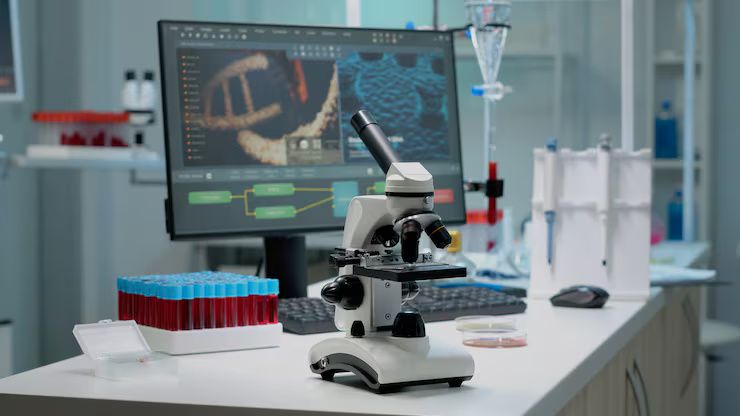
Context
What Are Laboratory Testing Devices?
Laboratory testing devices are instruments designed to perform controlled measurements or analytical procedures. A device may measure a single parameter, such as temperature or pH, or perform complex analysis involving multiple components.
Examples include centrifuges, microscopes, spectrometers, chromatographs, incubators, analytical balances, pH meters, laboratory analyzers, and thermal cyclers.
The appropriate device depends on the sample type, analytical method, required accuracy, throughput, environmental conditions, and applicable testing standards.
Major Categories of Laboratory Testing Devices
Laboratory equipment can be grouped according to its primary function.
| Device Category | Primary Function | Typical Applications |
|---|---|---|
| Analytical Balance | Precise mass measurement | Chemical and pharmaceutical analysis |
| pH Meter | Acidity or alkalinity measurement | Chemical and biological testing |
| Centrifuge | Sample separation | Clinical and research laboratories |
| Spectrophotometer | Optical measurement | Chemistry and biological analysis |
| Chromatograph | Component separation | Pharmaceutical and chemical analysis |
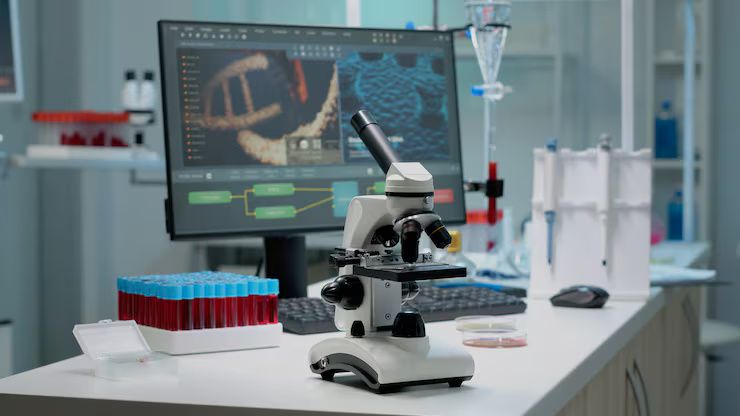
| Microscope | Magnified observation | Biology and materials research |
| Incubator | Controlled temperature environment | Microbiology and cell studies |
| Thermal Cycler | DNA amplification | Molecular testing |
| Autoclave | Steam-based sterilization | Laboratory equipment and media |
| Laboratory Analyzer | Automated sample analysis | Clinical and research testing |
Analytical Measurement Devices
Analytical devices provide quantitative or qualitative information about a sample. Spectrophotometers, chromatographs, mass spectrometers, and electrochemical analyzers are examples.
These instruments can be configured for different analytical methods and sample types.
Sample Preparation Equipment
Sample preparation is often necessary before analysis. Centrifuges, mixers, homogenizers, shakers, grinders, filtration systems, and heating equipment can prepare samples for subsequent testing.
Consistent sample preparation is important because variations at this stage can influence analytical results.
Laboratory Environmental Equipment
Some laboratory testing requires carefully controlled environmental conditions. Incubators, ovens, refrigerators, freezers, environmental chambers, and humidity-control equipment help maintain specified conditions.
The equipment selected depends on temperature range, humidity requirements, sample characteristics, and testing methodology.
Importance
Why Laboratory Testing Devices Matter
Laboratory measurements support research, manufacturing, quality control, environmental monitoring, and scientific investigation. Reliable instruments allow laboratories to collect quantitative information about materials and samples.
The importance of a particular device depends on the analytical method and the consequences of the measurement.
Supporting Quality Control
Manufacturing laboratories use testing devices to examine raw materials, intermediates, and finished products.
For example, pharmaceutical laboratories may analyze formulation characteristics, while food laboratories can examine chemical, microbiological, or physical properties.
Supporting Research and Development
Research laboratories require instruments that can detect changes in materials or biological systems.
Spectroscopy, microscopy, chromatography, molecular analysis, and thermal analysis are among the techniques used during research and development.
Measurement Accuracy
Laboratory testing devices need appropriate calibration and maintenance to provide reliable measurements. Factors such as instrument drift, environmental conditions, sample preparation, and operator technique can affect results.
Laboratories therefore establish procedures for calibration, verification, maintenance, and instrument performance monitoring.
Laboratory Automation
Automation can reduce repetitive manual steps and improve consistency in certain workflows. Automated sample preparation, liquid handling, plate handling, and analytical measurement systems can process multiple samples according to defined methods.
Automation can also connect instruments with laboratory information systems.
Laboratory Testing Technologies
Spectroscopy
Spectroscopic instruments measure interactions between electromagnetic radiation and matter. Different spectroscopy methods can provide information about chemical composition and molecular characteristics.
Common approaches include ultraviolet-visible, infrared, Raman, and atomic spectroscopy.
Chromatography
Chromatography separates components within a mixture. Gas chromatography and liquid chromatography are widely used analytical techniques.
Chromatographic systems can be connected with detectors that provide information about separated compounds.
Microscopy
Microscopes allow laboratories to observe structures that cannot be adequately examined with the unaided eye.
Optical, fluorescence, electron, and other microscopy technologies can be selected according to sample characteristics and required resolution.
Molecular Testing
Molecular testing devices can analyze genetic material or other biological markers. Thermal cyclers, real-time PCR systems, nucleic-acid extraction equipment, and related instruments are used in molecular workflows.
Thermal Analysis
Thermal analysis examines how materials respond to changes in temperature. Techniques can provide information about melting, crystallization, decomposition, glass transitions, and other thermal properties.
Electrochemical Testing
Electrochemical instruments measure electrical characteristics associated with chemical reactions or solutions.
pH meters, conductivity meters, ion-selective systems, and electrochemical analyzers are examples.
Industrial and Laboratory Applications
Pharmaceutical Testing
Pharmaceutical laboratories use analytical instruments for raw-material testing, formulation analysis, stability studies, process development, and quality control.
Chromatography, spectroscopy, dissolution testing, microscopy, and other methods can be incorporated into pharmaceutical analytical workflows.
Clinical Laboratories
Clinical laboratories use automated analyzers and other instruments to examine patient specimens.
Applications can include chemistry, hematology, immunoassays, molecular analysis, microbiology, and other diagnostic testing areas.
Food Testing
Food laboratories analyze samples for chemical composition, microbial characteristics, contaminants, nutritional components, and physical properties.
Testing devices can include chromatographs, spectrometers, moisture analyzers, microscopes, and microbiology equipment.
Environmental Testing
Environmental laboratories examine water, soil, air, and other samples.
Analytical equipment can identify chemical compounds, metals, nutrients, microorganisms, and other environmental parameters.
Materials Testing
Industrial laboratories use testing devices to characterize metals, plastics, ceramics, composites, coatings, and other materials.
Testing can examine hardness, tensile behavior, thermal properties, surface characteristics, chemical composition, and microscopic structure.
Biotechnology
Biotechnology laboratories use instruments for cell culture, molecular analysis, protein characterization, fermentation research, and biological process development.
The equipment configuration depends on the biological system and analytical objective.
Manufacturers and Suppliers
Laboratory testing device manufacturers produce instruments ranging from basic measurement equipment to advanced analytical platforms. Some companies specialize in a specific analytical technology, while others develop broader laboratory equipment portfolios.
When evaluating laboratory equipment manufacturers or suppliers, laboratories can examine:
- Measurement range
- Accuracy and precision specifications
- Detection limits
- Sample capacity
- Automation capabilities
- Software integration
- Calibration requirements
- Data-management functions
- Consumable requirements
- Applicable standards
- Technical documentation
Selection should be based on the analytical method and laboratory requirements rather than equipment specifications alone.
Recent Updates
Automated Sample Handling
Automated liquid handlers, robotic arms, plate-handling systems, and sample-management technologies are increasingly used in laboratories.
Automation can coordinate repetitive sample preparation and transfer steps while maintaining programmed workflows.
Connected Laboratory Instruments
Modern devices can communicate with laboratory information management systems and other digital platforms.
Electronic transfer of measurement data can reduce manual transcription and improve traceability when appropriately configured.
Artificial Intelligence and Image Analysis
AI-based image analysis is being explored for microscopy, material inspection, biological analysis, and laboratory research.
Machine-learning systems can identify patterns within images or analytical datasets, although validation and appropriate human review remain important.
Miniaturized Testing Devices
Miniaturized analytical platforms can reduce sample volumes and, in some applications, shorten processing workflows.
Microfluidic technologies, portable analyzers, and compact sensors are areas of continuing development.
Multiparameter Instruments
Some modern laboratory devices can measure multiple parameters within a single workflow.
Multiparameter systems can reduce the number of separate instruments required for selected applications and may simplify data collection.
Cloud-Connected Laboratory Data
Laboratory instruments can increasingly connect to centralized data platforms. This can support remote data access, instrument monitoring, electronic records, and laboratory workflow management.
Cybersecurity and access controls become important when instruments are connected to broader networks.
Laws or Policies
Laboratory Quality Systems
Laboratories may operate under formal quality systems depending on their purpose and industry. These systems can address document control, equipment management, personnel competency, method validation, sample handling, and record keeping.
Calibration and Verification
Laboratory instruments should be calibrated or verified according to their intended use and established procedures.
Calibration intervals depend on instrument type, usage, manufacturer specifications, historical performance, and applicable requirements.
Data Integrity
Digital laboratory instruments generate electronic measurement records. Appropriate controls can address user access, audit trails, data retention, backup, modification history, and record traceability.
Biosafety
Laboratories handling biological materials need appropriate biosafety procedures based on the nature of the materials and activities.
Equipment such as biological safety cabinets, autoclaves, sealed centrifuge systems, and appropriate containment technologies may be incorporated into laboratory workflows.
Chemical Safety
Chemical testing laboratories need procedures for chemical storage, handling, exposure prevention, waste management, and emergency response.
Specific requirements depend on the chemicals, laboratory activities, and jurisdiction.
Tools and Resources
Laboratory Information Management Systems
LIMS platforms can organize sample information, analytical results, instrument data, workflows, and laboratory records.
Integration with testing devices can reduce manual data entry and improve traceability.
Electronic Laboratory Notebooks
Electronic laboratory notebooks can document experimental procedures, observations, calculations, and results.
They can complement instrument-generated data within research and development environments.
Calibration Management
Calibration-management tools can track instrument identification, calibration schedules, certificates, verification results, and maintenance history.
Laboratory Data Analysis
Analytical software can process instrument measurements, generate reports, perform calculations, and visualize experimental data.
The software should be appropriate for the analytical method and data requirements.
Reference Materials
Certified reference materials and established laboratory methods can support analytical verification and measurement quality.
Laboratories should select reference materials appropriate to the specific test and measurement objective.
FAQs
What are laboratory testing devices?
Laboratory testing devices are instruments used to measure, analyze, observe, separate, or characterize samples and materials in scientific, industrial, clinical, and research laboratories.
What are common laboratory testing devices?
Common equipment includes analytical balances, pH meters, centrifuges, spectrophotometers, chromatographs, microscopes, incubators, thermal cyclers, laboratory analyzers, and sterilization equipment.
How are laboratory testing devices used in industry?
Industrial laboratories use testing devices for quality control, material characterization, chemical analysis, process development, environmental testing, pharmaceutical analysis, food testing, and biotechnology.
How does laboratory automation work?
Laboratory automation uses software, robotics, liquid handlers, sample-management equipment, and connected instruments to perform defined laboratory steps with reduced manual intervention.
What should laboratories consider when selecting testing equipment?
Important considerations include analytical requirements, measurement range, accuracy, precision, detection capability, sample throughput, software integration, calibration requirements, applicable standards, and laboratory workflow.
Conclusion
Laboratory testing devices provide the measurement and analytical capabilities required across scientific research, pharmaceutical manufacturing, clinical laboratories, food testing, environmental analysis, biotechnology, and industrial quality control.
The laboratory equipment landscape now includes conventional analytical instruments alongside automated sample handlers, connected devices, advanced imaging systems, molecular testing platforms, and data-management technologies. Selecting appropriate equipment requires consideration of the analytical method, sample characteristics, measurement requirements, calibration, data integrity, laboratory workflow, and applicable quality or regulatory requirements.